IKS Bulletin
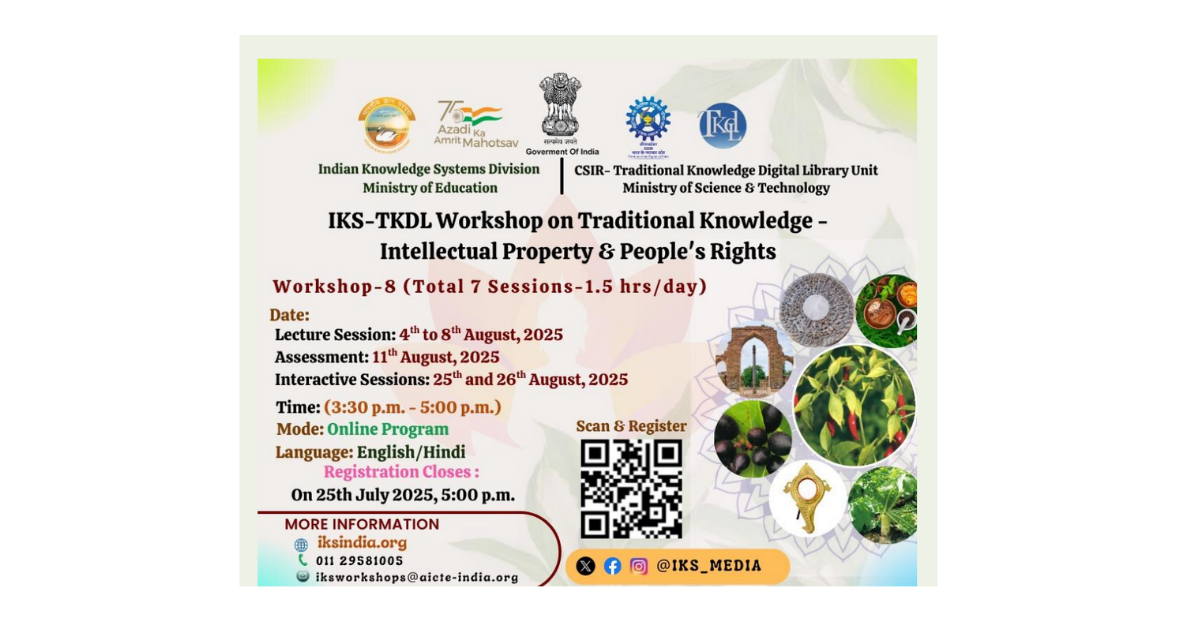
IKS-TKDL Workshop-8 on Traditional Knowledge - Intellectual Property & People's Rights
India’s rich cultural and traditional heritage, shaped over millennia, remains deeply relevant today. In line with NEP 2020’s vision of integrating traditional knowledge into education, the Indian Knowledge Systems (IKS) Division and the CSIR–Traditional Knowledge Digital Library (CSIR-TKDL) Unit have launched a joint initiative. This aims to raise awareness and provide training on traditional knowledge, intellectual property rights (IPR), and the rights of knowledge holders. The initiative underscores the role of traditional knowledge in national development, while promoting ethical practices in its use and preservation.
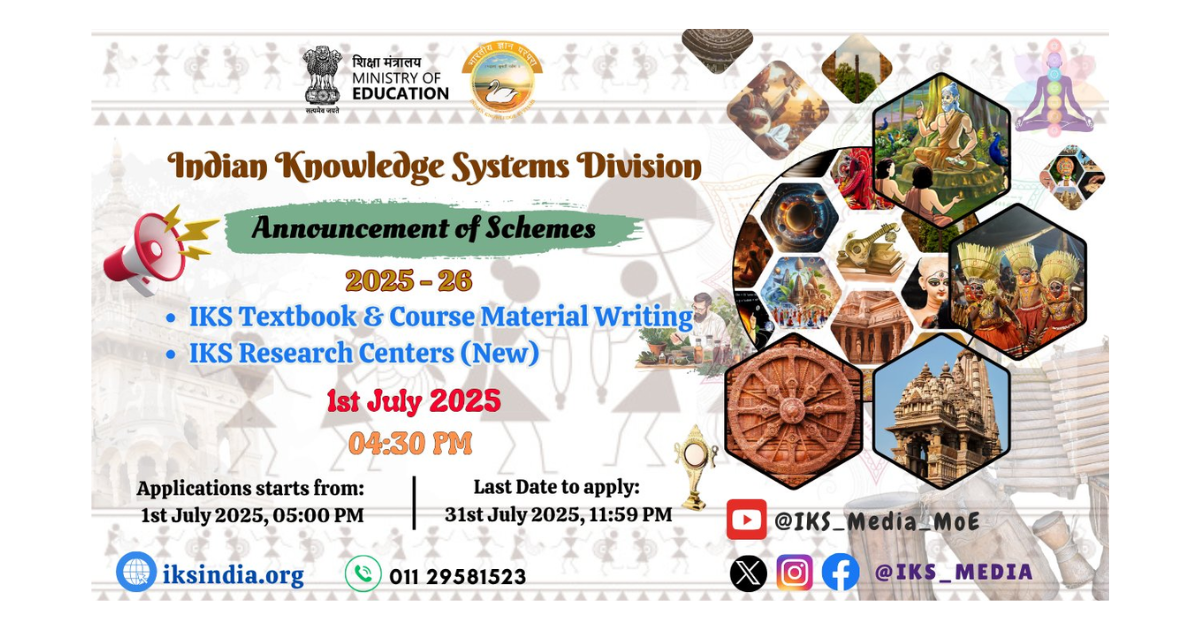
IKS Division's Scheme for IKS Center and Textbook Course Material.
The Indian Knowledge Systems (IKS) Division is inviting proposals under two newly launched schemes: IKS Research Center–5: Aimed at catalyzing research and education in Indian Knowledge Systems, this scheme offers funding of up to ₹5 lakhs per year for 2 years, with a required matching grant. IKS Textbook & Course Material Writing–02: This initiative supports the development of high-quality textbooks and course materials rooted in Indian Knowledge Systems. Last date to submit proposals for both schemes: July 31, 2025.
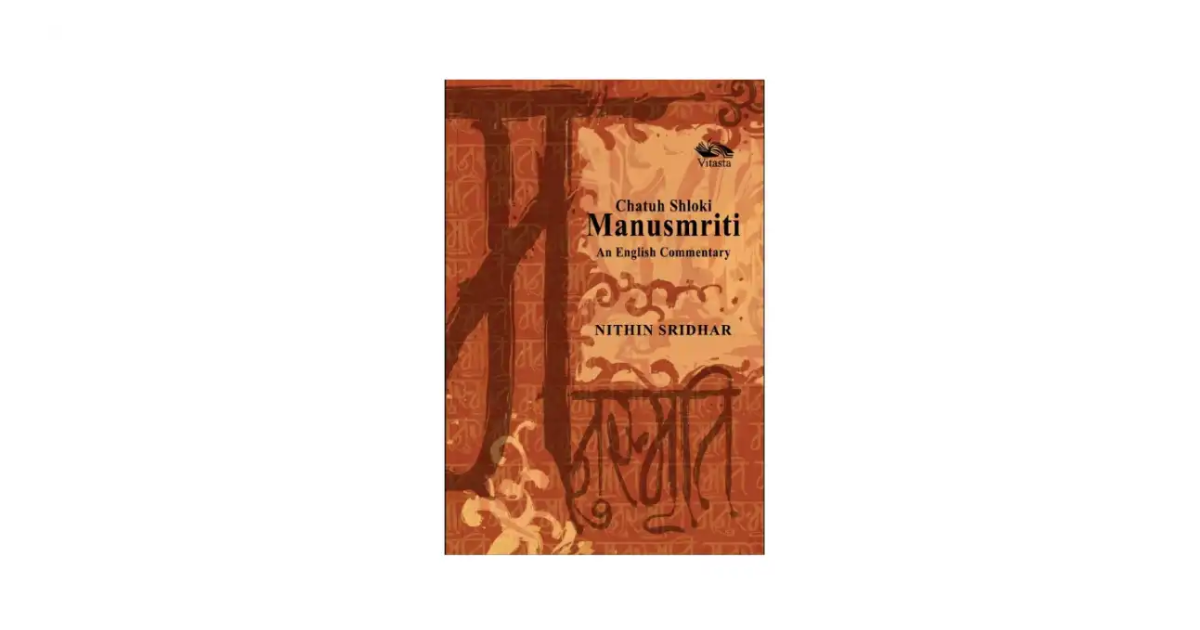
Book Review | Chatuh Shloki Manusmriti - An English Commentary by Nithin Sridhar
Chatuh Shloki Manusmriti: An English Commentary by Nithin Sridhar offers a focused, traditional-style exposition of the first four verses (shloki) of the Manusmṛti, situating them within the broader Vedantic and dharmaśāstra tradition. Sridhar draws on classical Sanskrit commentaries and lineage-based interpretation to clarify foundational concepts like dharma, varṇa, and ritual competency, countering modern misreadings rooted in colonial biases . A scholarly foreword by Prof Bharat Gupt frames the work as a necessary corrective to fragmented and prejudiced engagements with Manusmṛti , presenting its early verses as a coherent ethical vision, not a disjointed relic . This commentary is praised as a model for IKS scholars, combining depth with clarity, and restoring dignity and context to a text that is often misunderstood or dismissed .
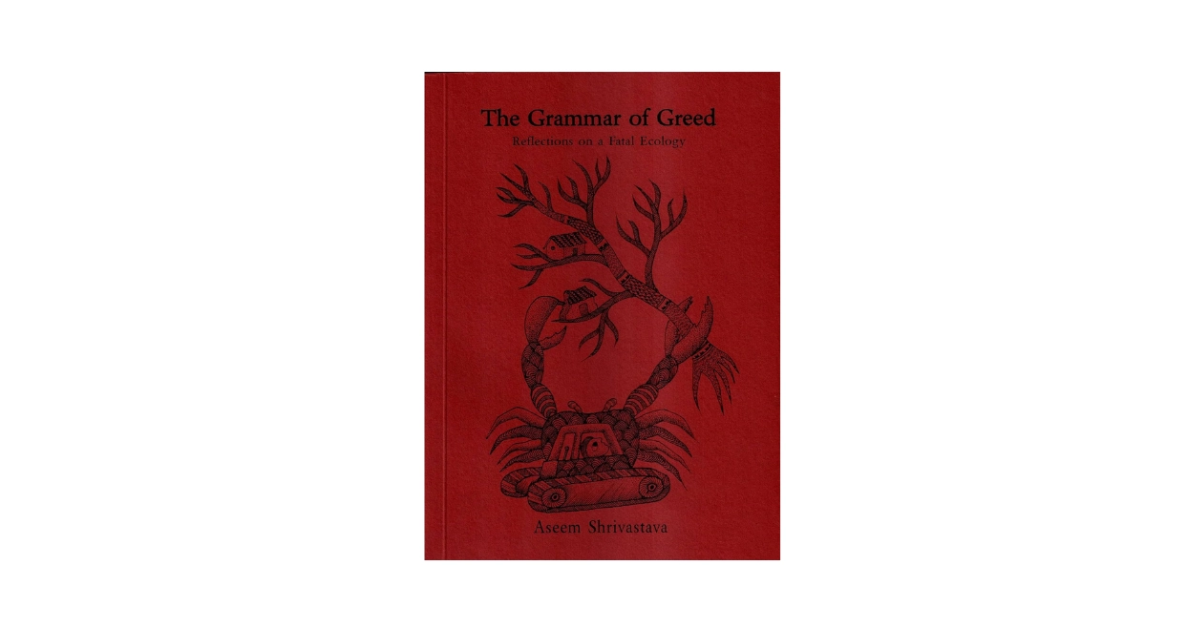
Book Review | Grammar of Greed - Reflections on a Fatal Ecology by Aseem Shrivastava
Grammar of Greed critically examines how language structures—its grammar—subtly normalize and legitimize the logic of greed and profit. The book unpacks how economic rationality is embedded in everyday communication, shaping thought and discourse in ways that reinforce exploitative systems. By revealing these hidden linguistic mechanisms, the authors invite readers to question dominant narratives and explore more ethical, dharma-aligned ways of thinking and expressing.
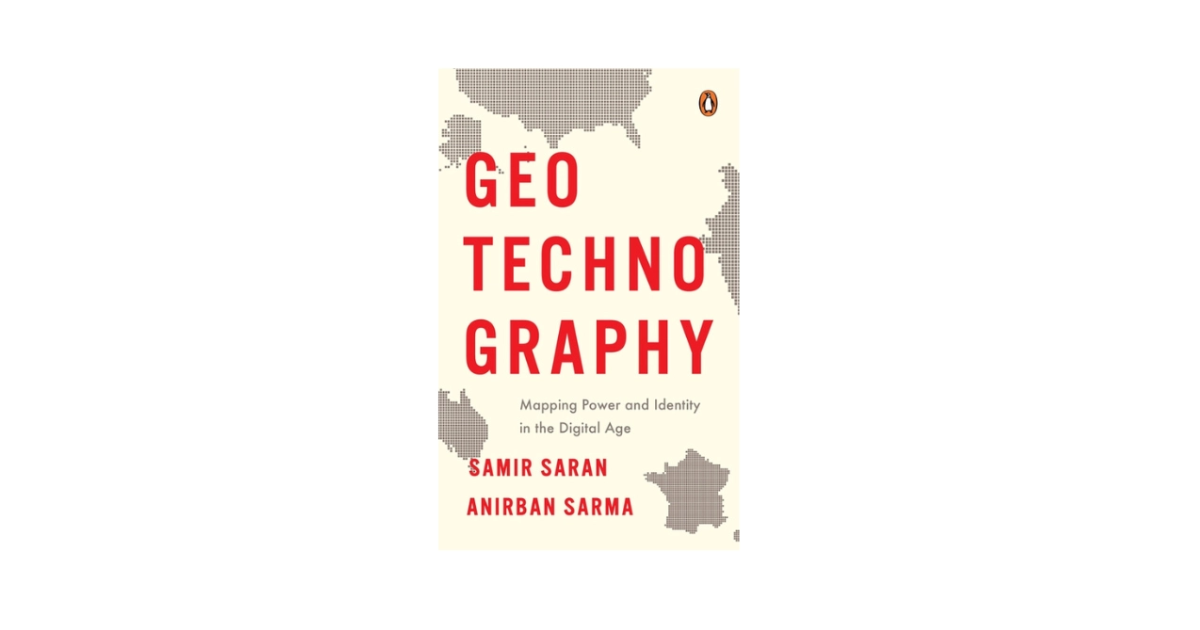
GeoTechnoGraphy - Mapping Power and Identity in the Digital Age by Samir Saran and Anirban Sarma
Geotechnography: Mapping Power & Identity in the Digital Age by Samir Saran & Anirban Sarma offers a sharp critique of how technology reshapes geopolitical landscapes, mental spaces, and societal norms. The authors propose an ethical framework for digital governance rooted in Indian civilizational values like dharma, collective responsibility, humility (vinaya), and self-mastery (indriya jaya). They advocate for anticipatory, context-sensitive policies—drawing from indigenous traditions—to balance innovation with social cohesion and sovereignty in the rapidly evolving “post-digital” world
IKSHA Journal of Indian Knowledge Systems (JIKS)
Launching soon in 2025, JIKS is a bi-annual, peer-reviewed journal by IKSHA, focused on mainstreaming Indian conceptual frameworks across disciplines. It combines critical inquiry with constructive theory-building rooted in Indian traditions, welcoming submissions in areas like philosophy, psychology, arts, governance, and science.IKSHA is a non-profit organization dedicated to preserving and promoting India's rich cultural heritage and knowledge system.
.png)
2nd Edition of Aucitya: Crafting Content with Saundarya & Satya
Step into a holistic creative space with Aucitya, where beauty (saundarya) meets truth (satya) in content creation. Designed for content creators, social media influencers, digital marketers, artistes, and creative professionals, the workshop inspires meaningful and culturally rooted creative expression. Don’t miss the 2nd edition—limited seats available!
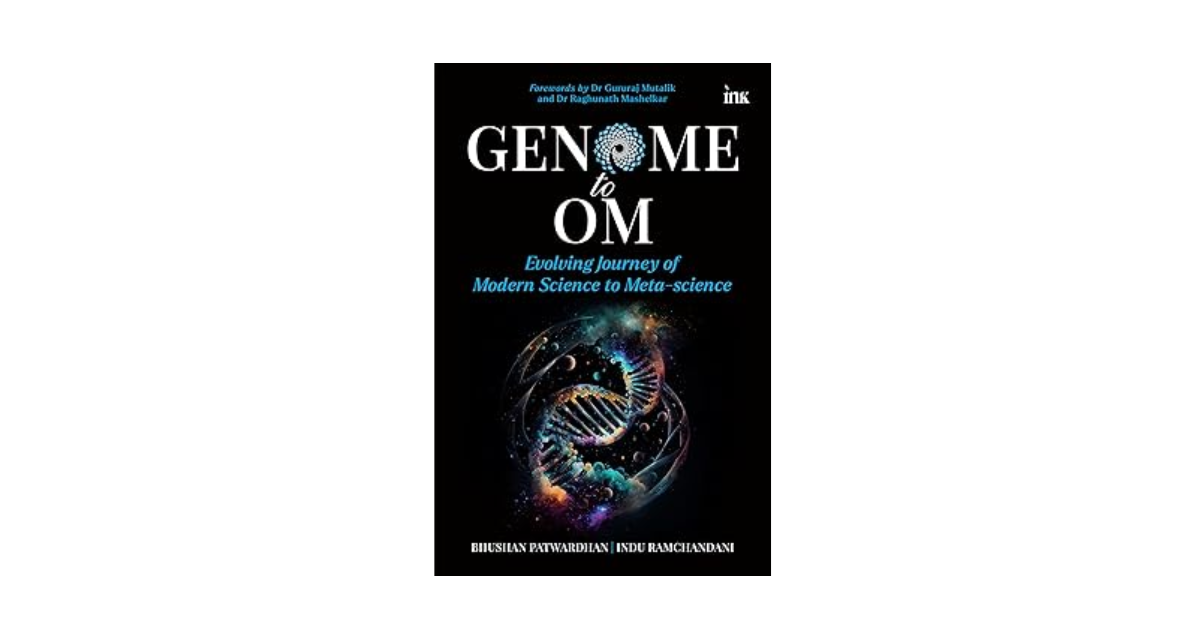
Genome to Om by Dr. Bhushan Patwardhan and Indu Ramchandani
Genome to Om by Dr. Bhushan Patwardhan and Indu Ramchandani is a compelling exploration of the intersection between modern science and ancient Indian wisdom. The book introduces the concept of "meta-science," advocating for a holistic approach that transcends traditional reductionist paradigms. It delves into themes such as genomics, consciousness, and spirituality, proposing a shift from the current Anthropocene epoch to an envisioned "Omcene"—an era rooted in compassion, sustainability, and unity. By integrating Āyurvedic concepts like prakṛti and rasāyana with contemporary scientific discourse, the authors offer a transformative framework for understanding life and consciousness.
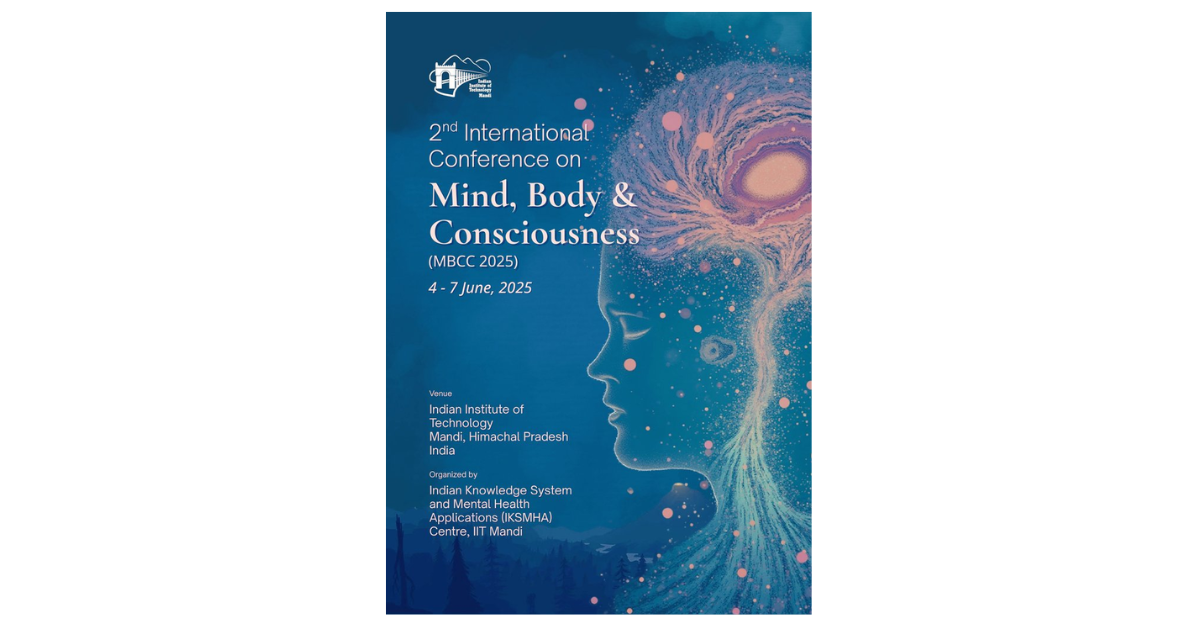
MBCC 2025 2nd International Conference on Mind, Body & Consciousness IIT Mandi | June 4–7, 2025
Join thought leaders like Deepak Chopra and Amish Tripathi at MBCC 2025, a global forum exploring the frontiers of consciousness, cognition, neuroscience, and Indian Knowledge Systems. Building on its acclaimed first edition, the conference brings together researchers, scientists, and practitioners for four days of interdisciplinary dialogue on the science and spirit of consciousness.
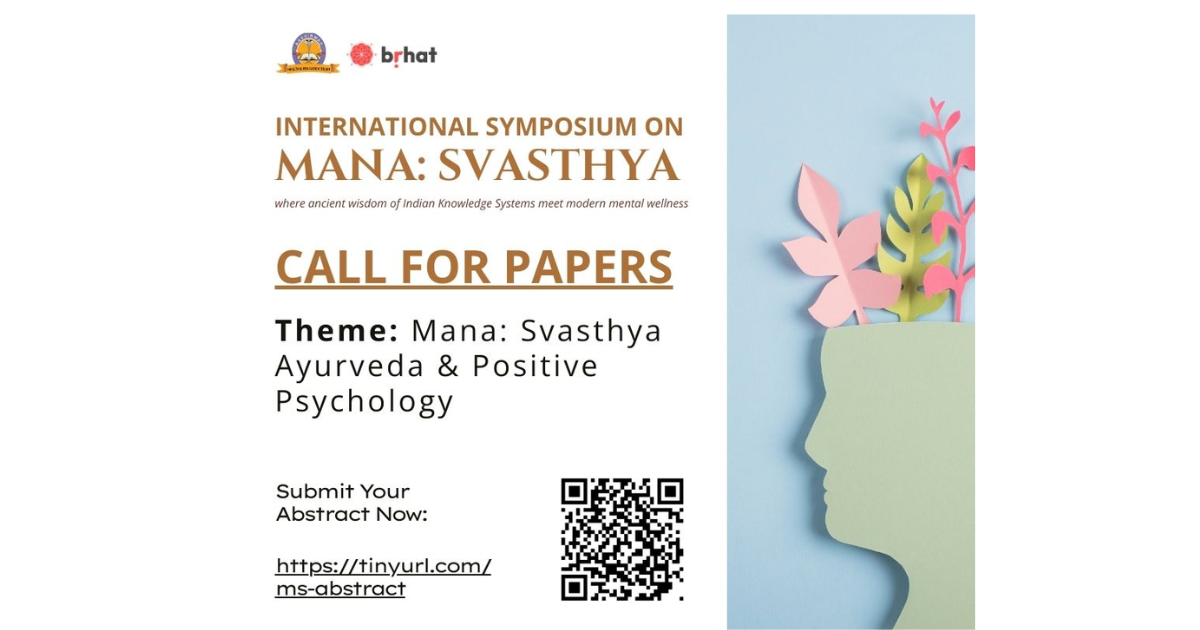
Call For Papers : Mana Svasthya Symposium
Aashirwad Health and Education Trust (AHET) and Bṛhat invite faculty, practitioners, and PG/Ph.D. scholars in Ayurveda and psychology to present original research at the 3-day international symposium *Mana: Svasthya. Theme: Mana Svasthya Ayurveda and Positive Psychology Sub-themes: 1. Mānasa tattva and prakṛti 2. Managing mental stress and functionality 3. Sattvavajaya cikitsā (healing the mind) 4. Contemporary innovations in mana: svāsthya Join us in reimagining wellness through the lens of Indian Knowledge Systems.
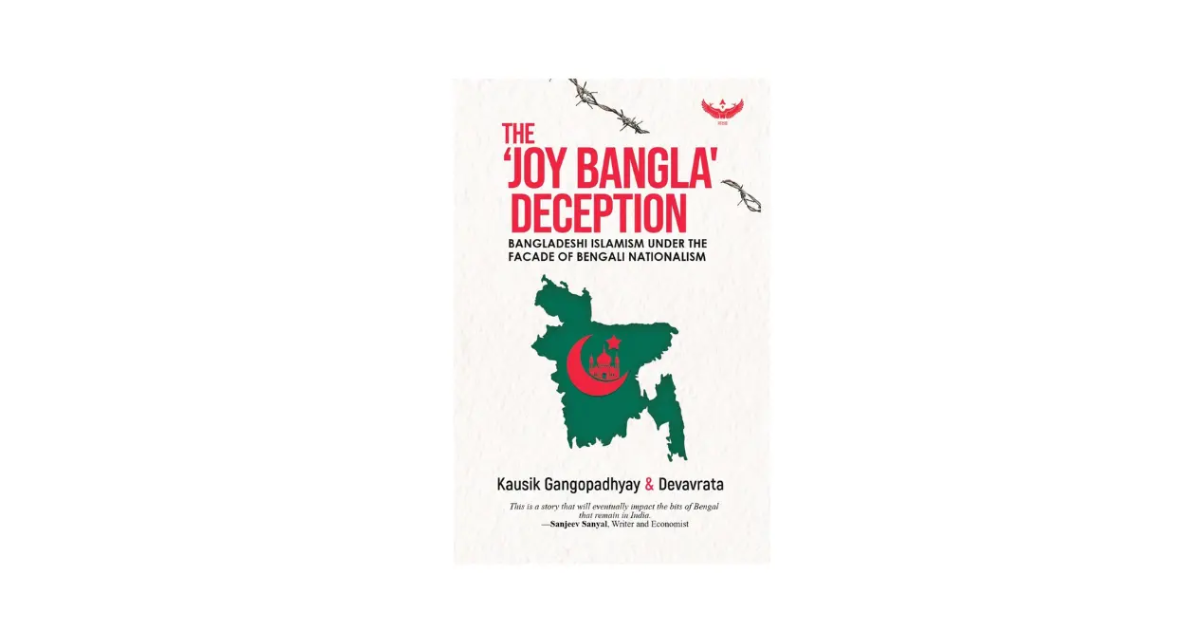
The ‘Joy Bangla’ Deception by Kausik Gangopadhyay and Devavrata
The 'Joy Bangla' Deception by Kausik Gangopadhyay and Devavrata offers a critical examination of Bangladesh's national identity, challenging the prevailing narrative of secular Bengali nationalism. The authors argue that beneath the surface of linguistic unity lies a history of Islamist politics and systemic marginalization of Hindu and Buddhist minorities. Through a detailed analysis of political movements and state policies from the 1920s to the present, the book contends that the nation's foundation is rooted more in Islamic imperialism than in secular ideals.
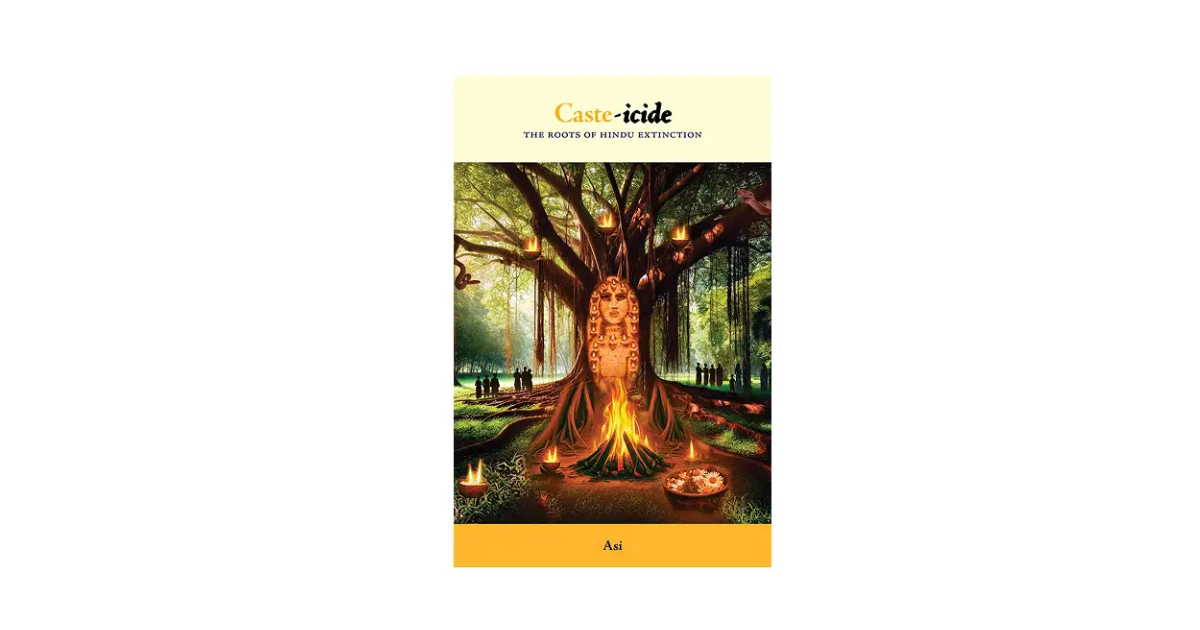
Caste-icide by Mahalingam Balaji
Casteicide by Mahalingam Balaji critically examines the origins and weaponization of the "caste system" narrative, arguing that it is a colonial construct lacking basis in indigenous Indian traditions. The book contends that this narrative has been strategically used to undermine Hindu society, drawing parallels to the Aryan Invasion Theory's trajectory from hypothesis to ideological tool. Balaji outlines six pillars underpinning this constructed narrative, including portraying Brāhmaṇas as outsiders and misrepresenting Hindu scriptures. Through meticulous research, he challenges these assumptions, asserting that the caste system, as commonly understood, is a myth perpetuated by colonial and academic agendas.
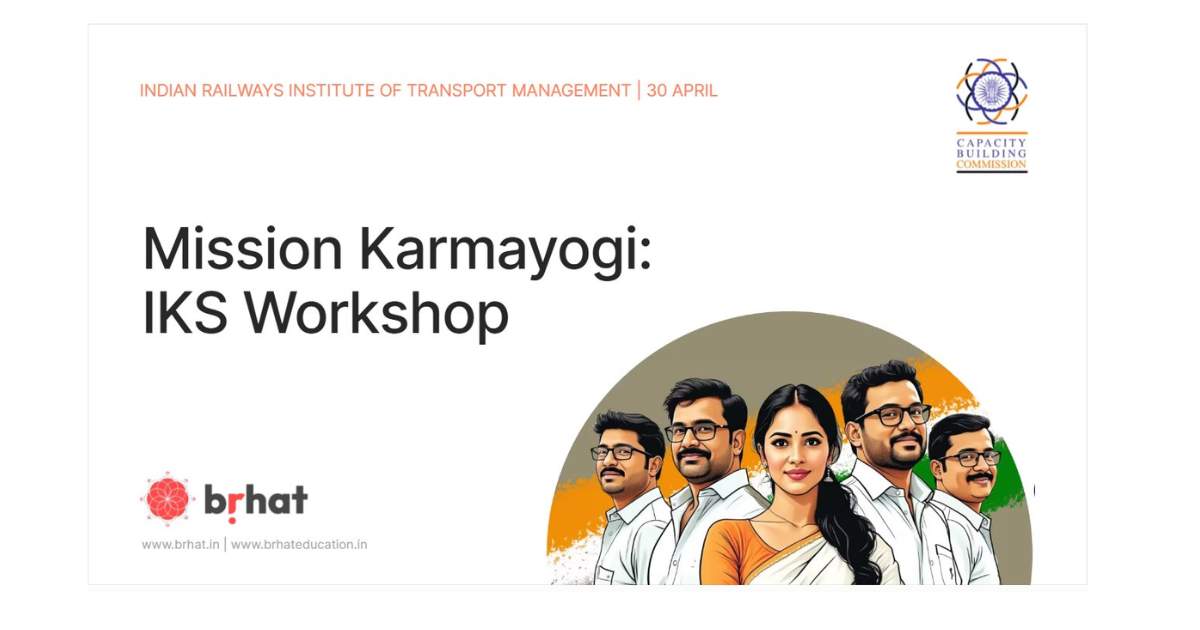
Bṛhat-IRITM Workshop on IKS in Governance
Bṛhat, in collaboration with the Institute of Railways and Transport Management (IRITM), Lucknow, conducted a workshop on Indian Knowledge Systems (IKS) in governance on 30 April 2025. Held under the Mission Karmayogi initiative of the Capacity Building Commission, the session engaged 20 senior officials and was led by Shri Raghava Krishna and Shri Anurag Shukla.
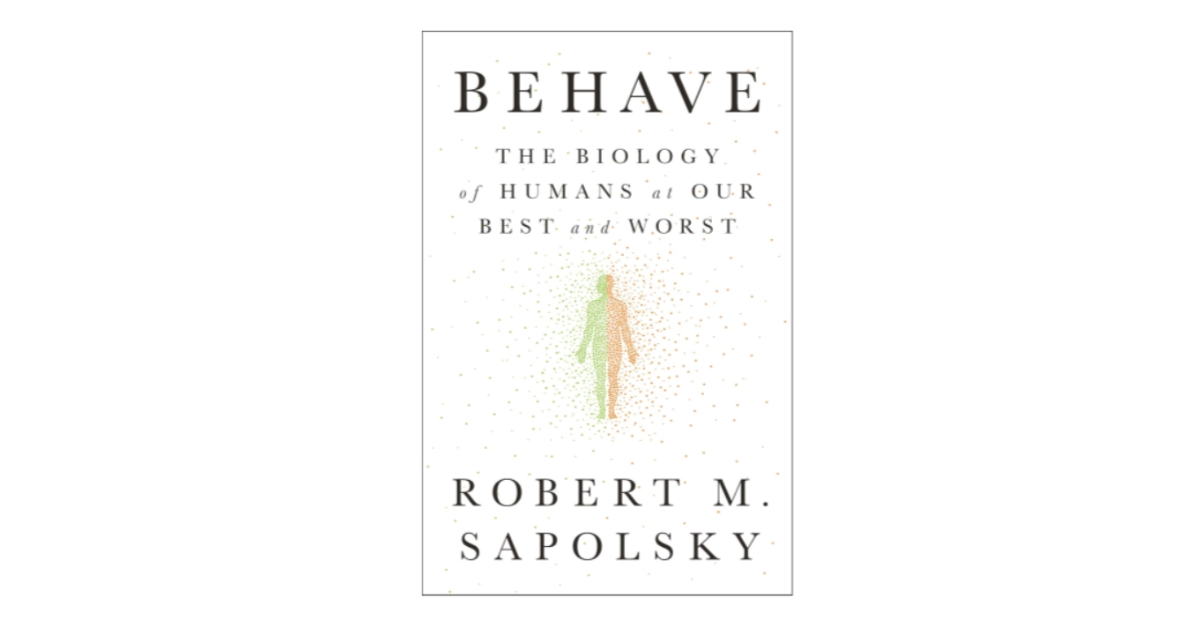
Behave - The Biology of Humans at Our Best and Worst by Robert Sapolsky
Robert Sapolsky’s Behave is a masterful exploration of the biological and environmental factors influencing human behavior. Employing a reverse-chronological approach, Sapolsky examines the immediate neural responses, hormonal influences, developmental experiences, and evolutionary history that shape our actions. This comprehensive analysis traverses disciplines such as neuroscience, psychology, and anthropology, offering profound insights into the complexities of human nature. Behave stands as a seminal work in behavioral science, illuminating the intricate interplay between biology and behavior.
.png)
Fundamentals of Archaeology
The fascinating science of Archeology is a key to understanding our origins and their environment. It is an interdisciplinary field. It reconstructs the world that once existed by deciphering the context of the smallest of the evidence. one-of-its-kind online course on Archaeology. Designed by Dr. Pramod Joglekar that provides a 360° insight into the fundamentals of Archealogy
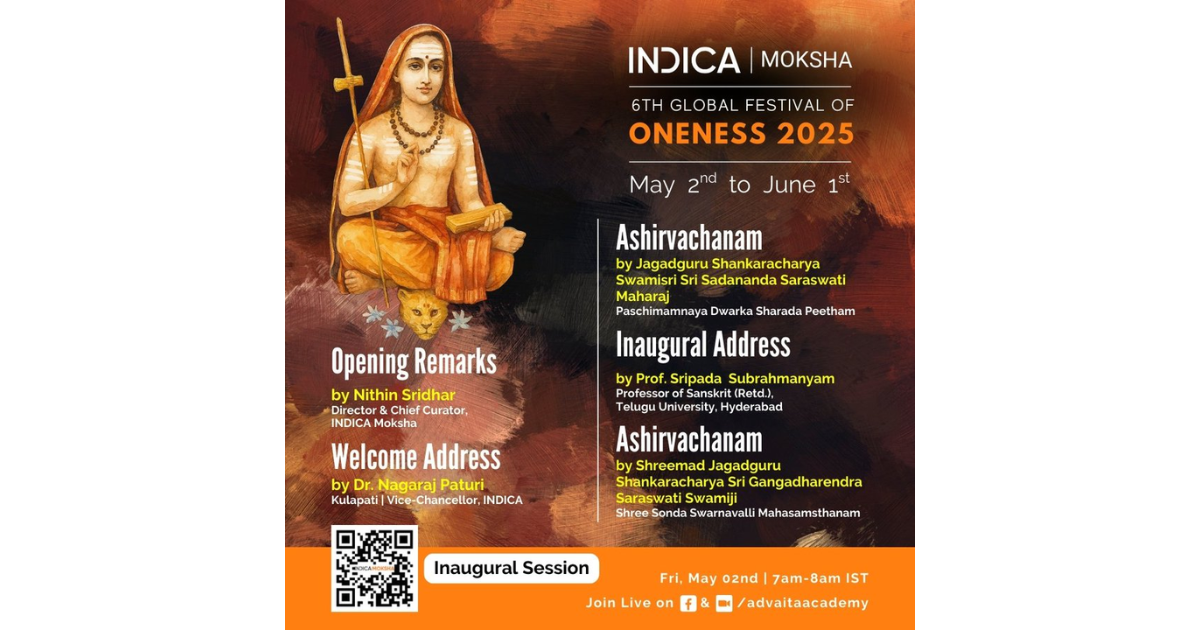
Global Festival of Oneness
INDICA Center for Moksha Studies (formerly Advaita Academy) is pleased to organize the 6th Edition of Global Festival of Oneness (GFO2024), our month-long online flagship programme dedicated to honoring the timeless life, profound teachings, and enduring legacy of Jagadguru Adi Shankaracharya—one of the greatest spiritual luminaries and philosophers in the history of Bharat.
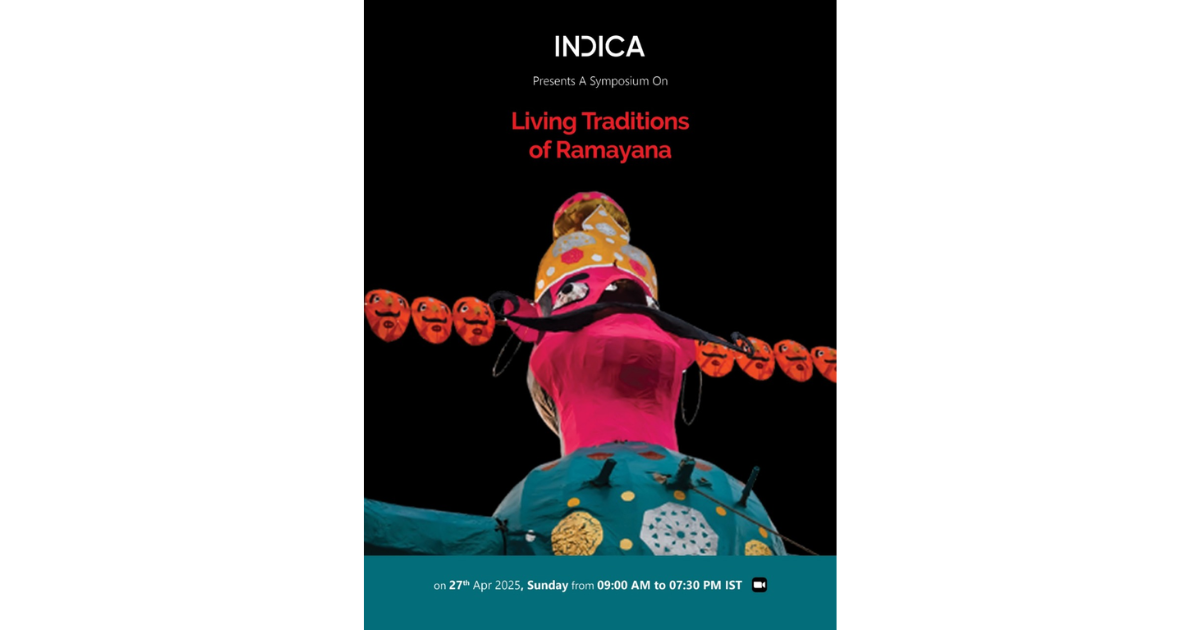
Symposium On The Living Traditions Of Ramayana
The Ramayana is not just an ancient story — it is a living force that continues to shape identities, inspire art, and guide spiritual life across India and the world. From village festivals and folk performances to temple rituals and community origin stories, the Ramayana breathes through countless cultural expressions. Join us for a unique online symposium that explores these vibrant, living traditions. Symposium will cover expert talks on Ramayana in Traditional and Contemporary Performances in Classical Dance, Classical Music, Puppet Shows, Street Theatrical Rituals, Inscriptions, Temple Sculptural Panels and Contemporary Sketches and Movies.
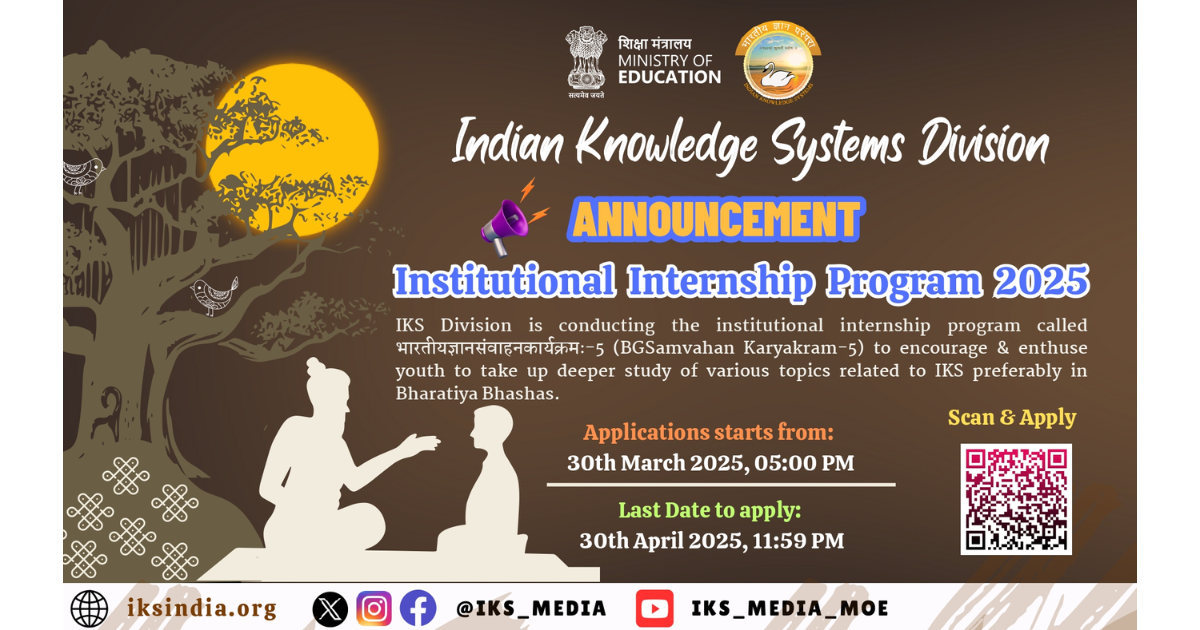
IKS Institutional Internship Program 2025
IKS Division of the Ministry of Education announces the IKS Institutional Internship Program 2025! The program is designed to encourage and enthuse youth to take up deeper study of various topics related to IKS in Bharatiya Bhashas.
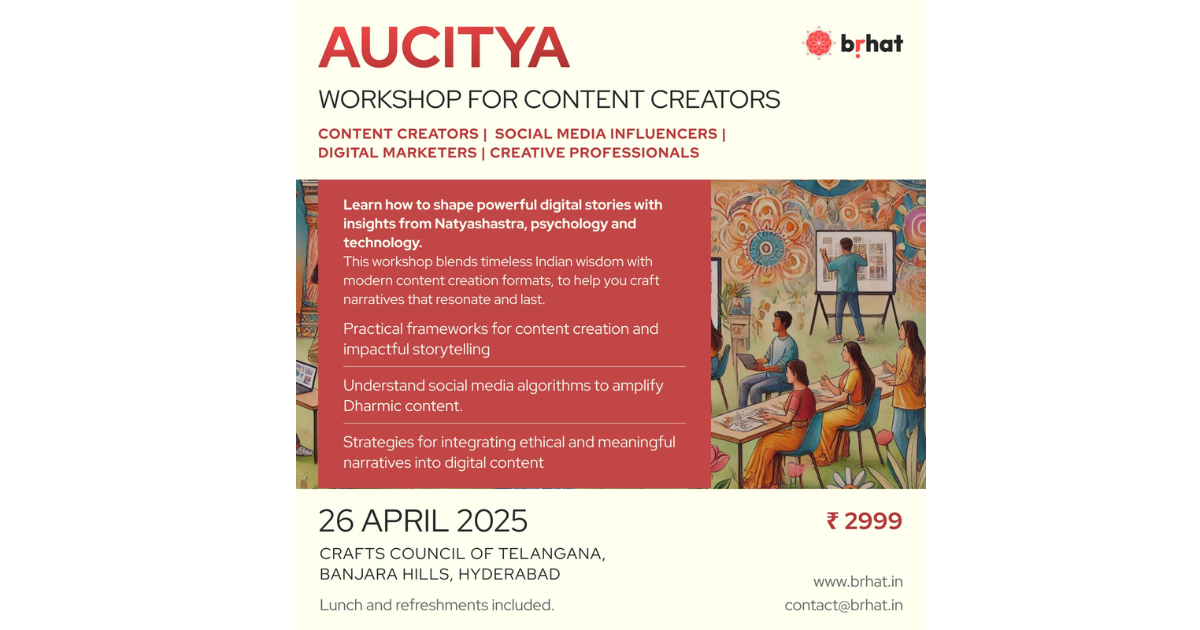
Aucitya
Aucitya, our upcoming workshop, is an effort to build a community of conscious creators. It shall provide frameworks and tools to create content that traverses the maze of algorithms, without losing meaning and purpose. We are happy to collaborate with partners like SMaRT who share this vision for conscious creativity.
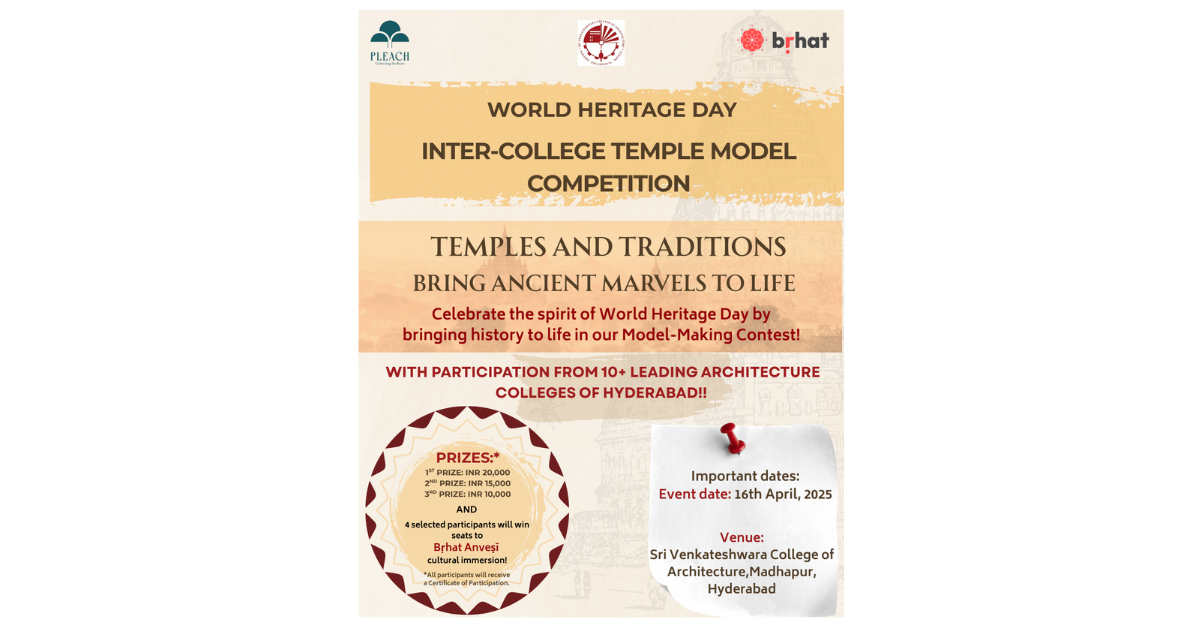
Śilpakalāyāḥ - a Temple Model Making Competition
Bṛhat is honored to associate with leading Architecture Colleges of Hyderabad to design an Inter-College Temple Model-making competition partnering with Pleach India Foundation We shall be conducting a Temple Architecture workshop, followed by the competition on 16th April 2025 on account of World Heritage Day. More than 10 student groups—each with 4 to 5 participants—showcased to life detailed replicas of iconic temples, including Ramappa Temple, Modhera Sun Temple, Chennakeshava Temple, Alampur Jogulamba Temple, Brihadishwara Temple, Kailash Temple, Vidyashankara Temple and others.
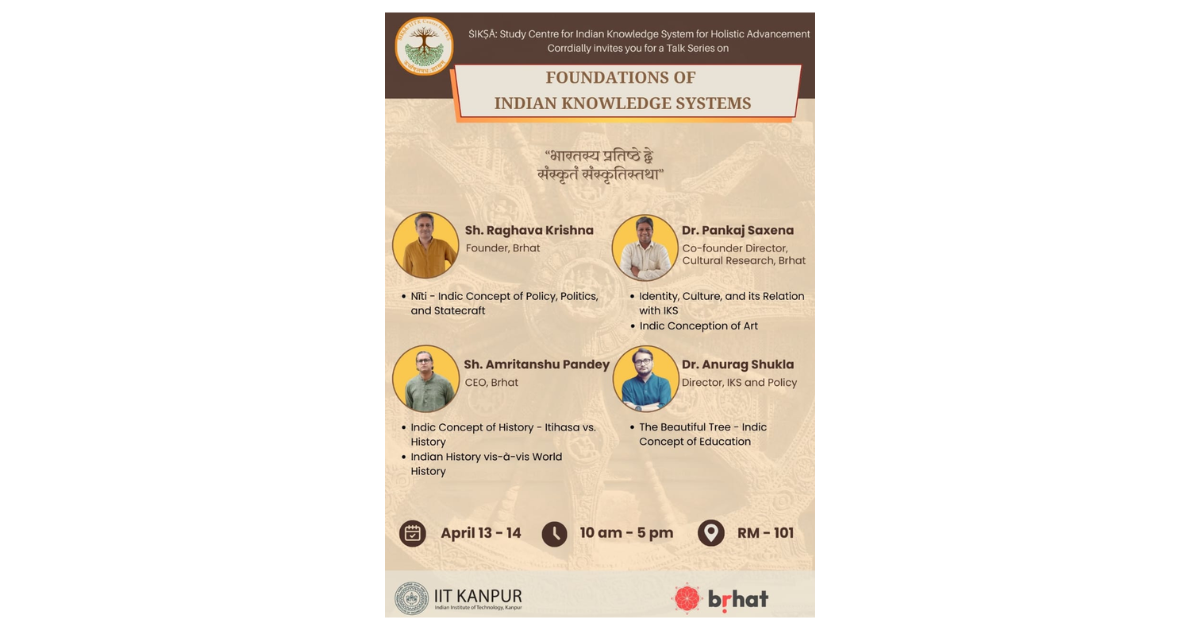
Orientation on Foundations of Indian Culture
Orientation on Foundations of Indian Culture at IIT Kanpur On April 13–14, a reflective lecture series at IIT Kanpur titled "Orientation on Foundations of Indian Culture" gathered seekers, scholars, and facilitators. They explored Bhāratīya thought across five sessions, discussing identity, culture, and their links to Indian Knowledge Systems (IKS).
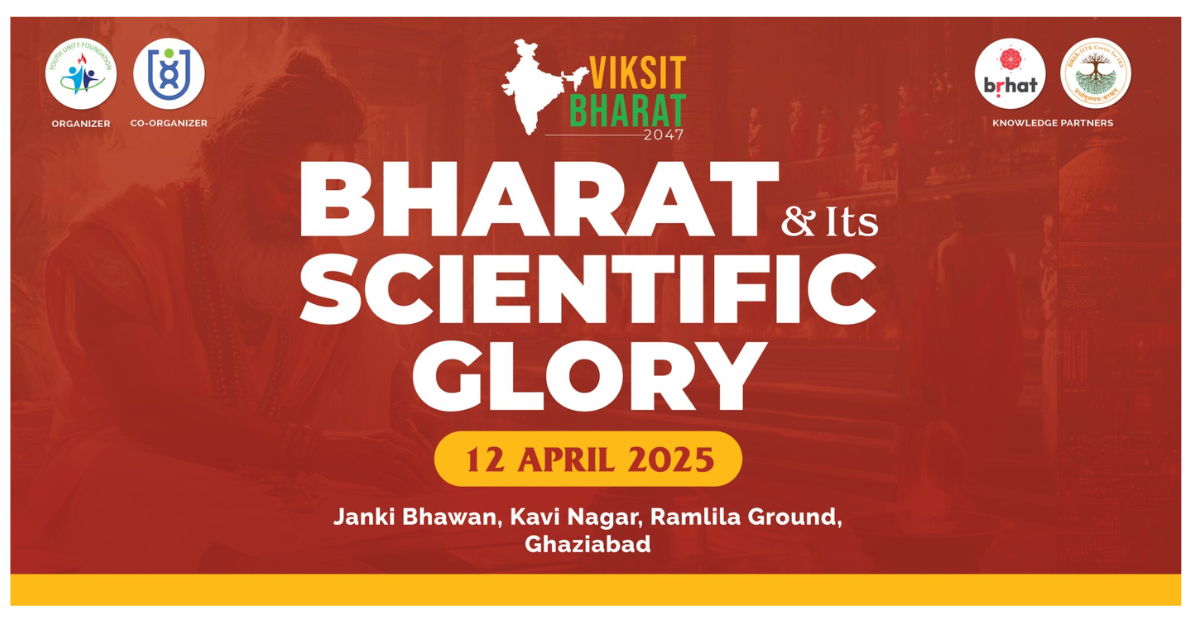
Bharat and Its Scientific Glory
The nationwide competition “Bharat and Its Scientific Glory” organized by Youth Unity Foundation and HS Foundation in collaboration with ŚIKṢĀ - Center for Indian Knowledge Systems, IIT Kanpur and Bṛhat as Knowledge Partners on 12 April 2025 encouraged keen students to explore the Indian scientific paradigm through modular themes such as gaṇita, āyurveda, vāstukalā, pramāṇa vijñāna, and yuddha vidyā, among others. First 3 spots were 1. The Sāṅkhya Model of the Universe - MIT - World Peace University, Pune 2. Pramāṇa Vijñāna (Vedic Philosophical and Cognitive Sciences) - Maharaja Sayajirao University of Baroda, Baroda 3. Military Science (Yuddha Vidyā) - Delhi Unjversity
.png)
PM Yuva 3.0
Aligned with NEP 2020’s vision to empower youth for leadership roles, a national mentorship scheme was launched on 31st May 2021. Focused on themes like India's National Movement and Unsung Heroes, it aimed to inspire fresh perspectives on the nation’s history. Conceived to groom young authors as ambassadors of Indian literature, the initiative leverages India’s robust publishing industry and rich literary heritage to promote indigenous narratives globally.
.png)
Indic Heritage Champions 2025
The Department of Heritage Science and Technology, IIT Hyderabad calls for applications to the Indic Heritage Champions Meet to be held at HST- IIT Hyderabad. This is a fantastic opportunity for students across the country with a passion for preservation of Indic cultural Heritage to showcase the rich Heritage from their local areas and get exposed to the state of the art in IKS & Heritage Technology at the IITH's HST. The workshop includes demos, lab visits and presentations on data science for heritage. In addition The young Champions will receive mentorship from IIT faculty on becoming Techno ambassadors for their local Heritage.
.png)
National Conference on IKS for ELEVATING LEARNING (Urdhvagami Adhyayan)
A National Conference on the Indian Knowledge System for ELEVATING LEARNING (Urdhvagami Adhyayan) was held on March 11, 2025, at its beautiful campus in Ahmedabad. Leading educationists and academics participated in this one-day event. Shri Raghava Krishna, Founder of Brhat Education Trust, spoke at the plenary session of the conference.
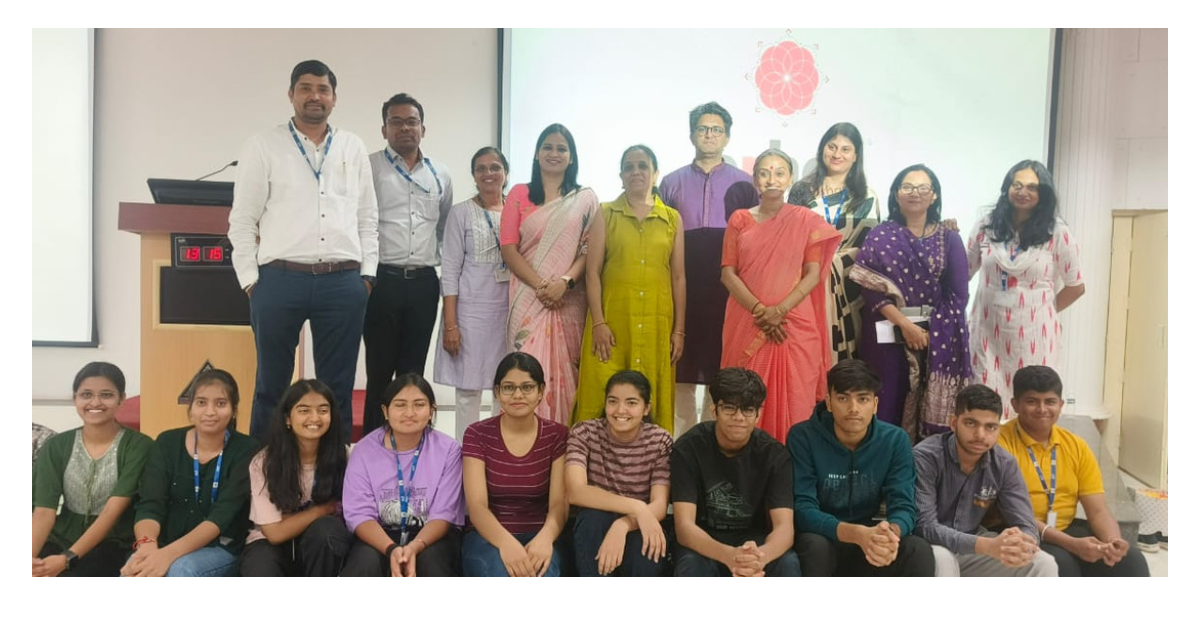
Workshop on Indian Knowledge Systems AIT
An immersive workshop on Indian Knowledge Systems (IKS) was conducted at Army Institute of Technology Pune. This event engaged more than 400 undergraduate students in Cultural Writing and an Integral Lens for Sustainability and Technology.
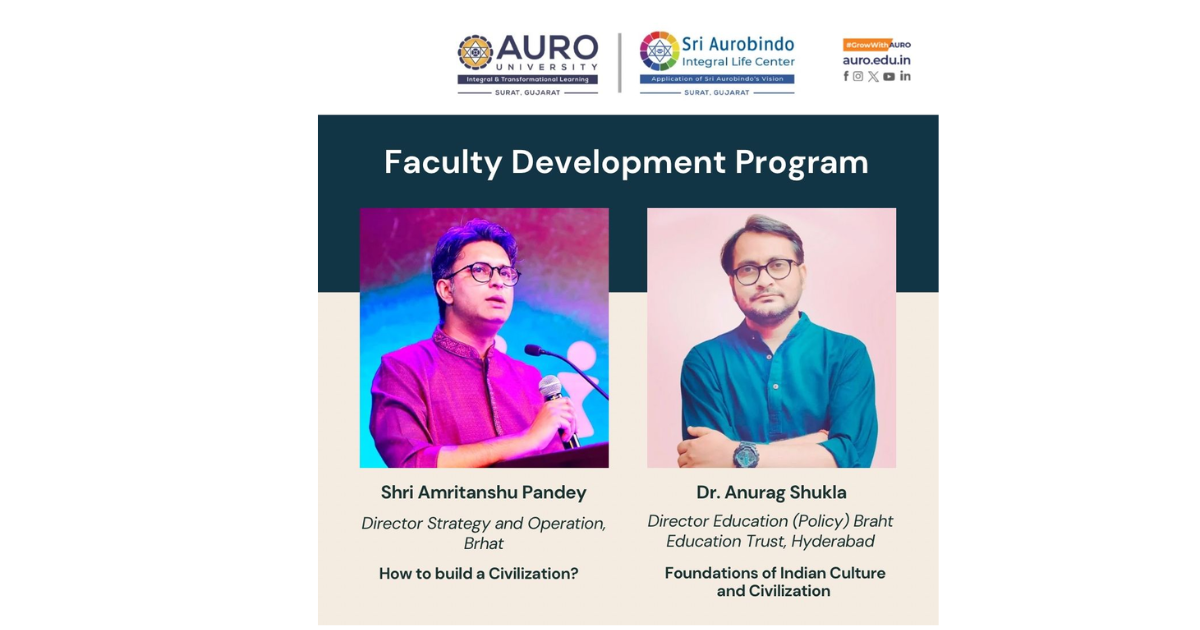
Faculty Development Program Auro University
22nd Feb, we participated in a Faculty Development Program on Integrating IKS in Higher Education, at Auro University, Amritanshu Pandey detailed the Indian view of civilization, its origins, and sustenance. Anurag Shukla, took the participants through the fundamental crises in education today, and explained how a rooting in IKS can address these challenges.
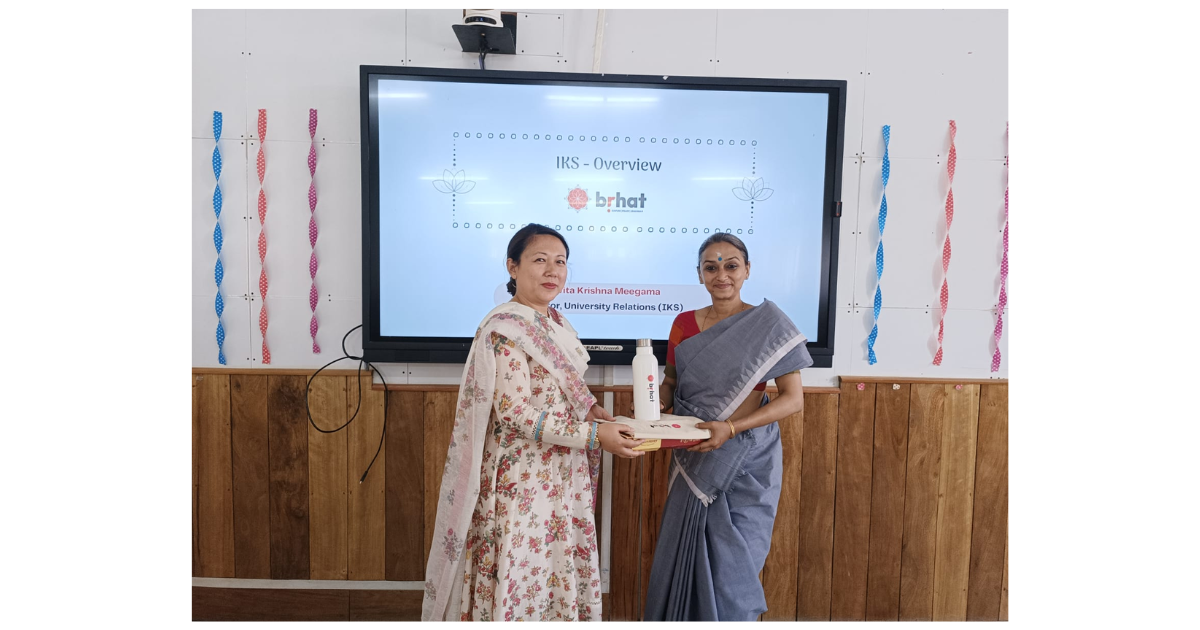
Overview of Indian Knowledge Systems IIIT Manipur
February 2025, we had the opportunity to present IKS sessions in the historic city of Imphal at three different institutions, in addition to IIIT Manipur, on the topic 'Overview of Indian Knowledge Systems. This continues to inform and enrich education through an IKS lense in higher educational institutions.
.png)
Multi-disciplinary conference on "IKS Teaching and Curriculum Design: Challenges for Teachers and Future Pathways
Yashwantrao Mohite College of Arts, Science and Commerce, in collaboration with Bharati Vidyapeeth, Pune, is hosting a multidisciplinary conference titled "IKS Teaching and Curriculum Design: Challenges for Teachers and Future Pathways." Aligned with NEP 2020's emphasis on immersive, IKS-based pedagogy, this conference aims to equip educators with the right knowledge and tools for effective classroom integration. Researchers, educators, policymakers, curriculum designers, students, and teachers are invited to submit papers and contribute to this vital dialogue. We are proud to serve as knowledge partners in this endeavor.
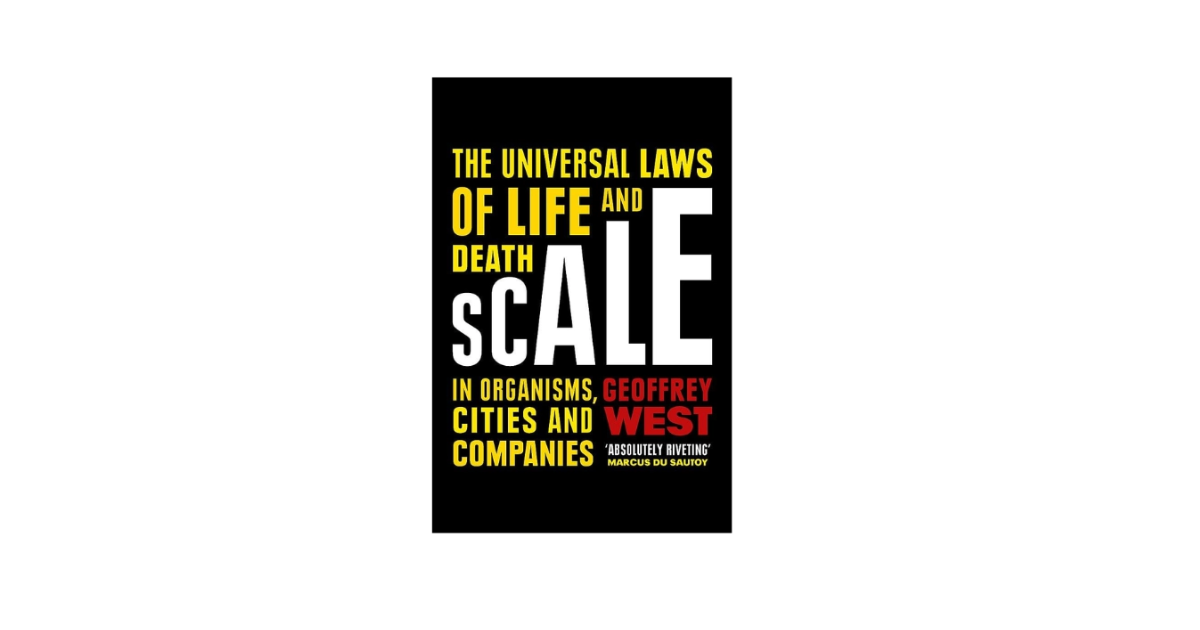
Book Review | Scale The Universal Laws Of Growth, Innovation And Sustainability In Organisms, Economies, Cities and Companies
This review explores the book’s presentation of universal principles rooted in Dharmic wisdom. It highlights how these laws govern human behavior, societal order, and cosmic balance. The author skillfully connects ancient insights to contemporary challenges, making it a thought-provoking read for seekers of timeless truths.
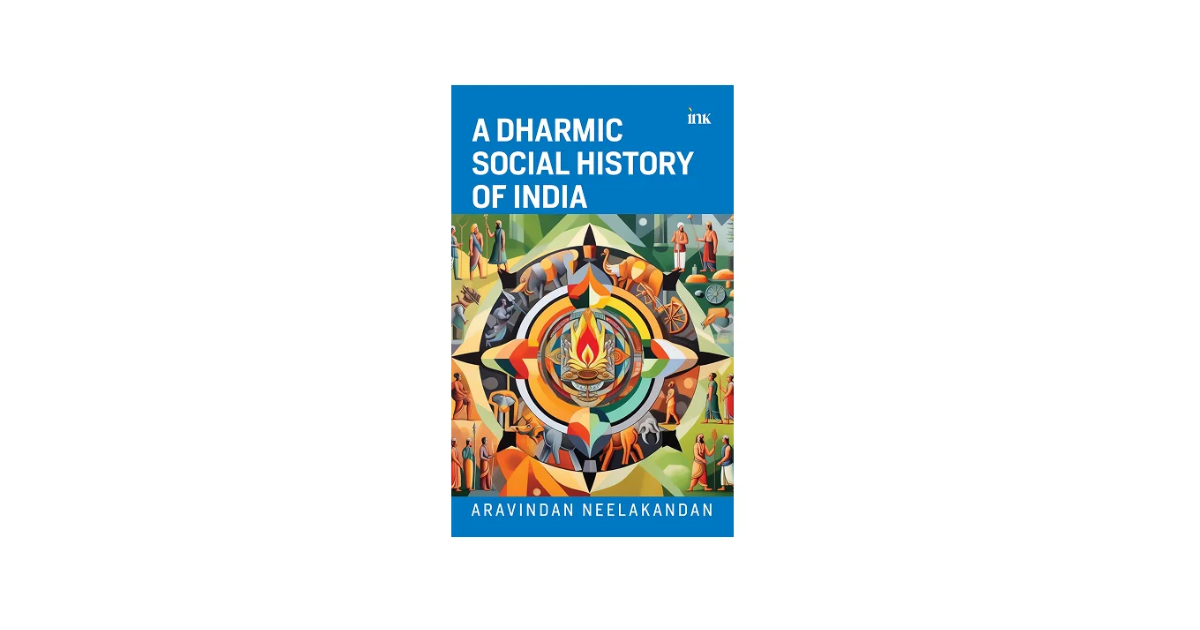
Book Review | A Dharmic Social History of India
This review highlights the book’s deep dive into India’s social evolution through a Dharmic lens. It examines how spiritual frameworks shaped societal norms, institutions, and cultural practices. The author’s insightful analysis underscores the resilience of India’s indigenous systems amid historical challenges, offering a refreshing perspective on the nation's social fabric.
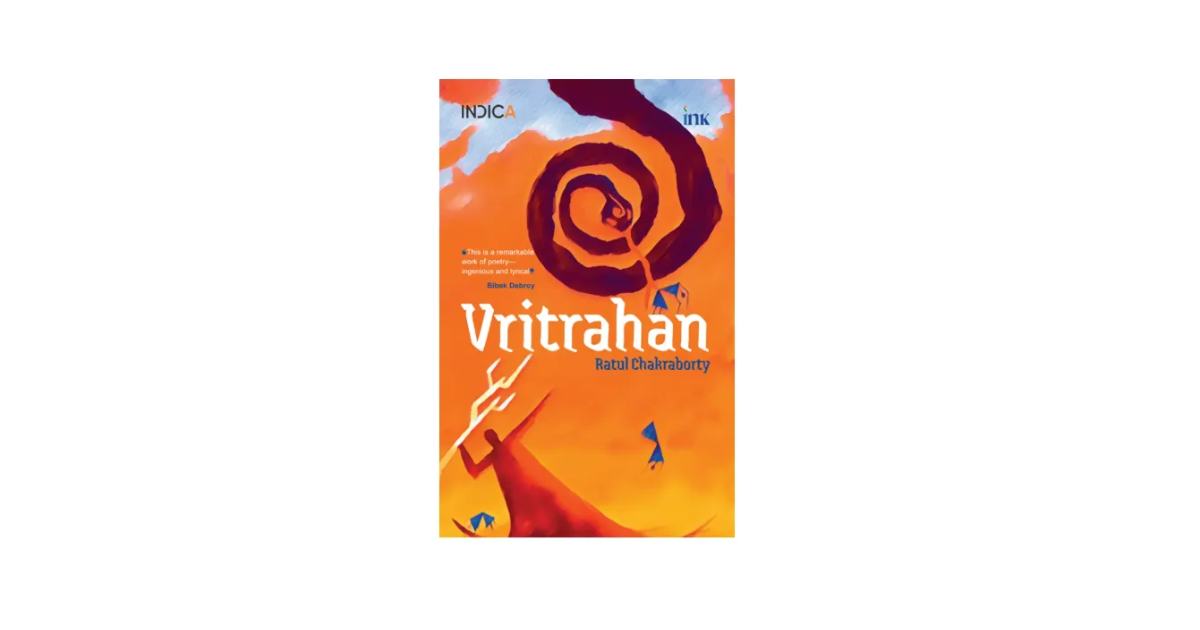
Book Review | Vritrahan
This review explores Vṛitrahan, a gripping narrative that reimagines the Vedic legend of Indra’s battle with Vṛitra. Blending mythology with historical insights, the book delves into themes of duty, power, and cosmic order. The review commends the author’s vivid storytelling and rich symbolism, making it a compelling read for mythology enthusiasts.
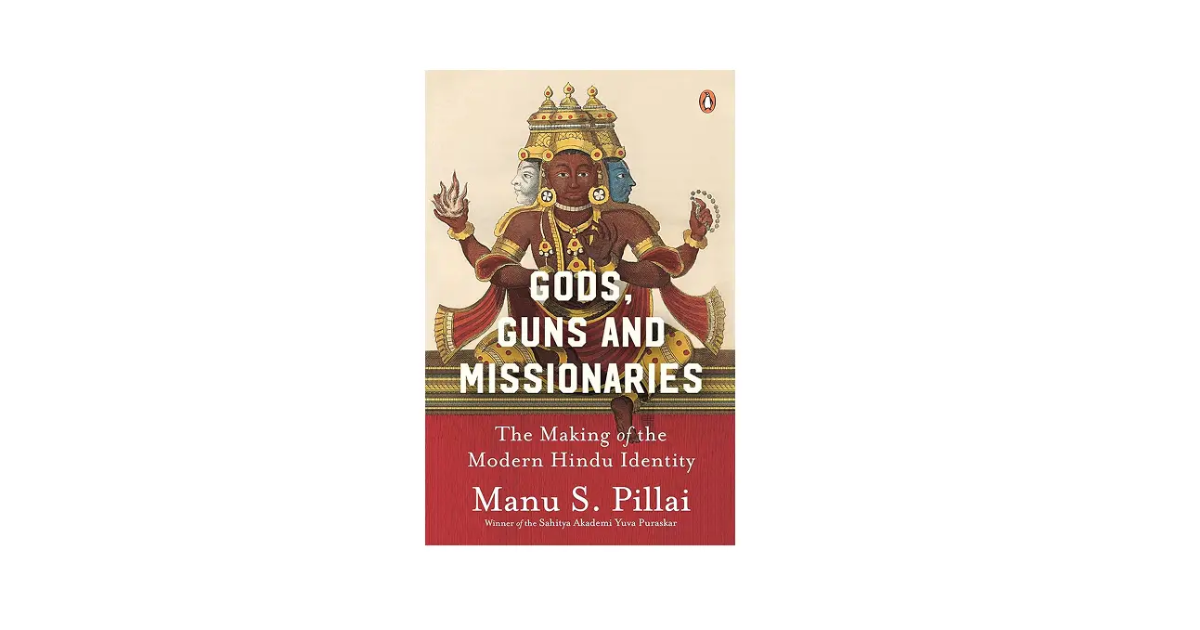
Book Review | Gods, Guns and Missionaries - The Making of the Modern Hindu Identity
This review examines the book’s exploration of colonial interventions in India’s tribal regions. It highlights how religious conversions, backed by missionary efforts, were intertwined with political and militaristic agendas. The analysis underscores the cultural disruptions faced by indigenous communities, offering a compelling narrative on resistance and resilience.
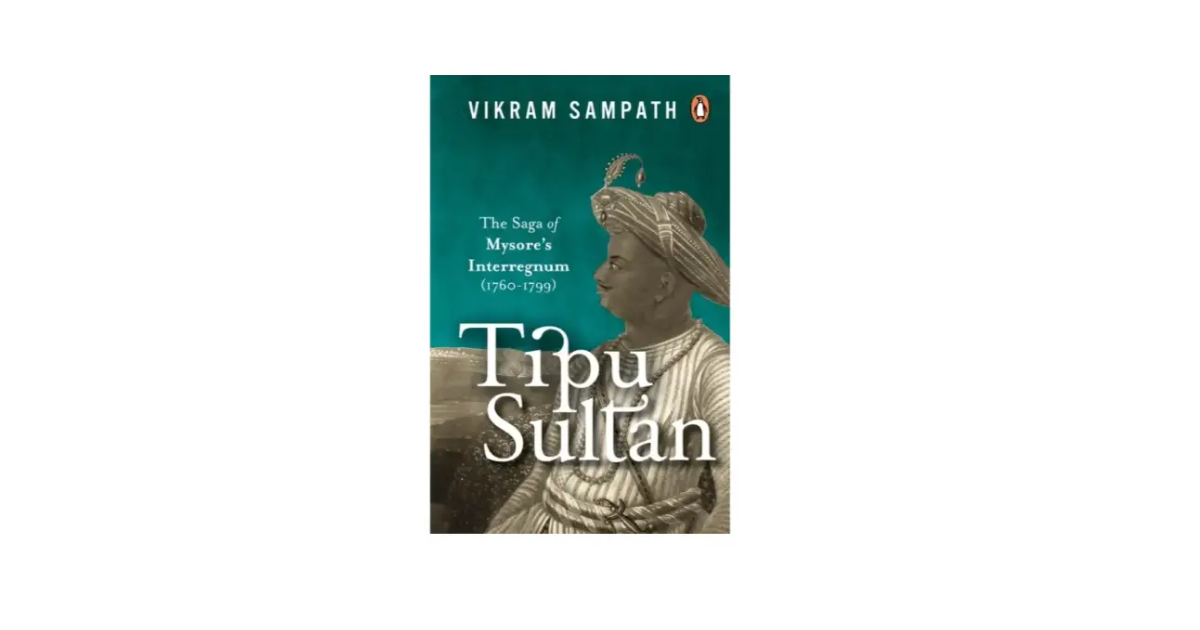
Book Review | Tipu Sultan - The Saga of Mysore's Interregnum
This insightful review delves into the complexities of Tipu Sultan's reign, exploring his political ambitions, military campaigns, and their impact on South Indian history. The author presents a balanced narrative, highlighting Tipu’s strategic prowess alongside the socio-cultural upheavals of his rule. The review offers valuable insights for those interested in India’s historical landscape.
.png)
Feet on Earth Festival 2025: A Celebration of Art, Culture, and Ecology
Since its inception in 2022, the festival has brought vibrant traditions to life across Hyderabad’s historic venues. Past editions featured themes like APAH at the Salarjung Museum and DHARANI at the Bansilalpet Stepwell, spotlighting folk forms such as Yakshagana, Lavani, and classical dances like Kuchipudi and Mohiniattam. The upcoming edition, VRIKSHA, will be hosted on 18-19 January 2025 at the iconic Hyderabad Public School, Begumpet. Highlights include the tribal Uurti Kott Patt, Srividya Anish’s Nruthya Harikatha, and Shalabhanjika Krida by Maya Dance Company. Join the Tree Walk with Kobita Dass Kolli, culminating in the magical performance Radish by Kriti Stories.
.png)
Ramayana Kalpavrksam 2025
We are delighted to invite you to Rama Rasa, the performance segment of Ramayana Kalpavrkṣam 2025, an enchanting celebration of Bharata’s rich tradition and culture through dance, music, and storytelling. Featuring an illustrious lineup including Vishakha Hari, Kalakshetra Foundation, Ranjani-Gayatri, JNMDA, and Shankarananda Kalakshetra, this three-day festival promises to immerse you in the timeless essence of the Ramayana. 31 Jan - 2 Feb 2025 CCRT, Kondapur, Hyderabad Come, be part of this soul-stirring journey
.png)
Evolution in Four Dimensions - Genetic, Epigenetic, Behavioral, and Symbolic Variation in the History of Life
In "Evolution in Four Dimensions," Eva Jablonka and Marion J. Lamb challenge traditional Darwinian evolution by proposing that heredity extends beyond genes to include epigenetic, behavioral, and symbolic variations. They argue that organisms actively influence their evolution through cultural and behavioral interactions, suggesting that life is more complex and creative than previously understood. This perspective encourages a broader exploration of human behavior and socio-cultural evolution, moving past the gene-centric view of heredity.
.png)
FDP-n-IC Bharatiya Jnana Sourabha on (Indian Knowledge Systems)
India is considered to be the cradle of civilizations. Over and above, India is known for its wide knowledge base; all aimed at sustainable peace, progress and prosperity of the society. Whether it is ancient or modern; India/Indians had/have a wide range of social, scientific and technological contributions. Percolating this knowledge base further strengthens the scope for sustainable social sciences, scientific and technological contributions towards the said sustainable peace, progress and prosperity. In this background, Sri. Rajiv Dixit Vichara Vedike, Karnataka joins hands with Bharat Vikas Sangam, New Delhi; and Vikas Academy, Kalaburgi; supported by several universities and institutes and universities to jointly conduct a one week Faculty Development Program – cum – International Conference (FDP-n-IC) titled “Bharatiya Jnana Sourabha”(Indian Knowledge Systems (IKS) from 30th Jan to 5th Feb '25. This FDP-nIC is a part of Bharatiya Samskruti Utsava-7; a festival of Bharatiyata conducted at Kalaburgi District of Karnataka. The program is hosted by Sri. Kottala Basaveshwara Bharatiya Shikshana Samithi, Sedam; as part of their Golden Jubilee.
.png)
Mahabharata Sadhana
Anaadi Foundation invites you to Mahabharata Sadhana, an 8-day residential program designed to help participants think clearly, act confidently, and live liberated. Scheduled from 25th December 2024 to 1st January 2025 at Iyyar Malai, Palani, Tamil Nadu, this program delves into topics like the interaction between the individual, society, and the universe, Dharma and duty, leadership, ethics, and decoding one's Swadharma. It also includes insights from Tapasya, developing Shraddha in dharmic principles, and exploring cosmic perspectives, justice, and consequences. Guided by Guru Dampati: Siddhayogi Shriram Adinarayanan and Matrushree Ananthalakshmi, this program offers transformative learning.
.png)
Gurukulavasam
The Dharma Gurukulam by Anaadi Foundation is organizing Gurukulavasam, a residential program designed to provide a taste of traditional Gurukulam learning. This camp will take place at Dharma Gurukulam, Palani, Tamil Nadu, India, on 28th and 29th December 2024. Open to children aged 10–13 years, along with their parents, educators, acharyas, and Gurukulam enthusiasts, the program offers an immersive experience in various disciplines including Saṃskṛtam (Language of Science), Gaṇitam (Indian Mathematics), Āyurveda (Health Sciences), and Nakṣatra Vidya (Indian Astronomy).
.png)
Digital Sanskrit Learning - Level 1
The goal of the DIGITAL SANSKRIT LEARNING COURSE is to make accessible the authentic knowledge of Sanskrit language to the public in an era of heightened curiosity about India’s history and heritage. In the process of reaching out to millions of people, it came to fore that a great number of people aspire to acquaint themselves with Sanskrit language especially through digital mediums at their convenience and pace.
.png)
IKS-TKDL Workshop on Traditional Knowledge - Intellectual Property & People's Rights
The IKS Division of the Ministry of Education, in collaboration with the CSIR-TKDL Unit, invites faculty, researchers, and UG/PG students to the Online IKS-TKDL Workshop on Traditional Knowledge, Intellectual Property, and People's Rights. Scheduled from 10th to 13th December (workshop) with an assessment on 16th December, the sessions will be held from 3:30 to 5:00 PM IST. Participants will explore key topics like patents, copyrights, trademarks, geographical indications (GI), and more.
.png)
Dharmanomics - An Indigenous Economic Model
Sriram Balasubramanian's Dharmanomics delves into India’s ancient dharma-driven economy, tracing its evolution from the Sarasvati Valley Civilization to the Vijayanagara Empire, with a focus on the Chola, Pallava, and Pandya dynasties. It highlights the inclusive and sustainable practices of śreṇīs (mercantile guilds), which transcended caste boundaries and operated autonomously under dharma, supported by kingdoms through taxation, defense, and infrastructure. Temples served as economic hubs, funding public works, acting as banks, and fostering community welfare, with transactions seen as sacred commitments. The model emphasized sustainable growth, balanced consumption, and wealth preservation, reflecting enduring values. Balasubramanian positions dharmanomics as a blueprint for India’s economic resurgence and identifies key areas for further research, including Southeast Asian trade links and ancient monetary systems.
.png)
Online Symposium on Kumbh Melas and Pushkarams
Join on Sunday, November 24, 2024, for an online symposium exploring Kumbh Melas and their South Indian counterpart, Pushkaram. Featuring talks by researchers, administrators, saints, and practitioners, the symposium will cover: Historic and Puranic significance Spiritual power of rivers (Teertha Mahaatmya) Administrative insights Intercultural aspects Festivals like Tamil Mahamakham and Telugu Pushkaram
.png)
Indian Temple Architecture An Introduction
Indian Temple Architecture - An Introduction is an online course that cuts through the threads of India's kaleidoscopic cultural heritage. It is a self-paced online learning course, specially designed and delivered by Dr. Anuja Joshi. Enroll today to take an in-depth look at the art and science governing the design and construction of Indian temples, their varied forms, regional nuances, and spiritual significance. This course presents a unique sojourn through the continuum of centuries of architectural excellence, which shaped the sacred spaces of India.
.png)
Call For Papers : Conference On IKS Studies Through Colonial Encounter
INDICA is pleased to announce a conference titled IKS Studies through Colonial Encounter: Emergence, Evolution, and Effect," to be held on March 14–15, 2025, in Hyderabad or Delhi. Curated by Dr. Nagaraj Paturi, Senior Director and Dean of IKS Studies at INDICA, the event invites scholars to explore how colonial frameworks shaped, suppressed, or altered Indian Knowledge Systems (IKS) during the colonial era. The conference aims to analyze the evolution of IKS in this period and its enduring impact. Scholars are encouraged to submit their abstracts by December 31, 2024, and final papers by February 15, 2025, to contribute to this vital discourse.
.png)
Voice of Covai
Voice of Covai (VOC) is proud to host Awake, Arise, Assert, a dynamic conclave celebrating the enduring influence of Bhāratīya culture in shaping India's essence and identity. Join us for engaging dialogues and debates that explore the timeless wisdom and principles sustaining our nation. The event will feature: Eminent leaders Renowned historians Esteemed legal experts Vibrant youth voices Advocates for civilizational values This is your opportunity to connect, reflect, and contribute to the discourse on India’s rich cultural heritage.
.png)
Exploring Ancient Prosperity: Dharmanomics Book Launch at IIT Hyderabad
How did ancient Indian empires like the Chozha, Pāṇḍya, and Vijayanagara build enduring marvels like the Bṛhadīśvara Temple and Angkor Wat? Certainly not by magic, but through a sophisticated economic model rooted in dharma. Author Sriram Balasubramanian delves into these questions in Dharmanomics, his latest work and sequel to Kautilyanomics. The book explores ancient India’s temple-driven ecosystems, dhārmika capitalism, and corporate guilds bound by śreṇi dharma that fostered prosperity for millennia. In collaboration with the Department of Heritage Science and Technology, IIT Hyderabad, the next talk in the Heritage Lecture Series will feature Sriram Balasubramanian presenting his new book.Date 1st December 2024
.png)
Menstruation Across Cultures
Nithin Sridhar's Menstruation Across Cultures: A Historical Perspective offers an in-depth exploration of menstruation's significance across various civilizations. The book examines how different cultures have perceived and managed menstruation, highlighting both commonalities and unique practices. Sridhar delves into the philosophical and ritualistic aspects of menstruation, particularly within Hinduism, providing a comprehensive understanding of its role in societal and religious contexts. The work is well-researched, drawing from a wide array of sources to present a nuanced perspective on this often overlooked subject.
.png)
Bharata Before the British
Shonaleeka Kaul's Bharata Before the British explores India’s pre-colonial history, emphasizing its cultural unity and intellectual richness. Drawing on texts like the Rājataraṅgiṇī, she highlights Kashmir’s integral role in India’s heritage, particularly in Śaivism and aesthetics. Kaul critiques colonial-era interpretations of Sanskrit literature, arguing for culturally rooted perspectives. The book challenges narratives of India as a modern construct, celebrating its enduring legacy and cohesive identity.
.png)
Mysuru Yoga Utsava
We are delighted to announce our association with Yoga Indica and Indica for the Mysuru Yoga Utsava, scheduled from December 12-15 at Windchimes, Mysore. This year’s theme, Ananda, invites participants to explore the boundless ecstasy of eternal bliss and discover how yoga can bring joy to daily life. The Utsava promises an enriching experience with over 30 experiential sessions, 20 interactive workshops, captivating cultural performances, and insightful exhibitions. Join us in celebrating the timeless wisdom of yoga in the heart of Mysuru
.png)
Kriya Utsava
Shri Raghava Krishna and Shri Pankaj Saxena recently spoke at Kriya Utsava, a transformative event series hosted at the iconic Bharat Mandapam in Delhi. Bringing together thought leaders, changemakers, and visionaries from Bharat and beyond, Kriya Utsava inspired purposeful action through the eternal principles of Dharma. Rooted in Dharmic wisdom, the speakers shared profound insights to empower the next generation towards upliftment and meaningful engagement in daily life. The event showcased a groundbreaking partnership with Bhashini, the AI-powered translation platform by MeitY, enabling multilingual accessibility. Talks were disseminated globally via Prasar Bharati, Doordarshan, and All India Radio, bridging ancient wisdom with modern outreach for mass impact.
.png)
Inaugural Ceremony of IKS Programme at IIT Delhi
Join in for a pioneering initiative aimed at integrating India's rich civilizational wisdom into modern fields such as Public Systems, Technology, Education & Pedagogy, and Health & Well-being. Key speakers include: Dr. Rajiv Kumar (Former Vice Chairman, NITI Aayog) Prof. K. Ramasubramanian (IIT Bombay) Shri Rajiv Vasudevan (CEO, Apollo AyurVaid) Shri Santosh Misra (Former IAS) Prof. Sampadananda Mishra (SanskritScholar) 17th October, 2024(Valmiki Jayanti) Time: 10:30 AM Venue: Seminar Hall, IIT Delhi
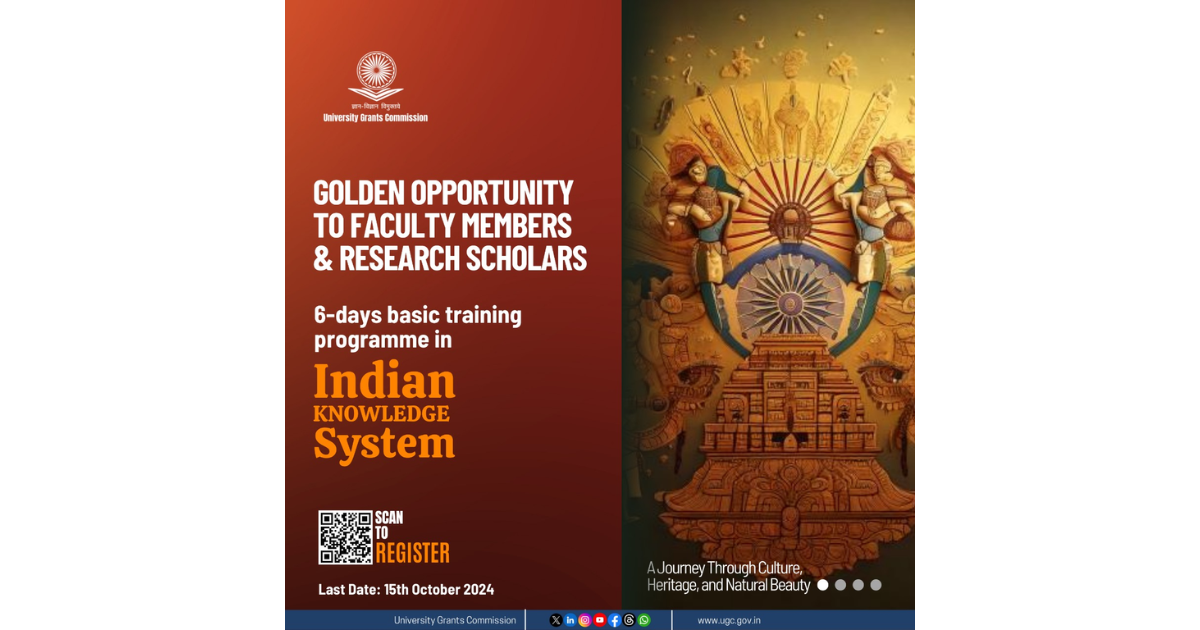
Basic Course on Indian Knowledge Systems
Join the 6-Day Basic Training Programme in Bharatiya Jnana Parampara organised by UGC for Faculty Members and Research Scholars from HEls across the country.
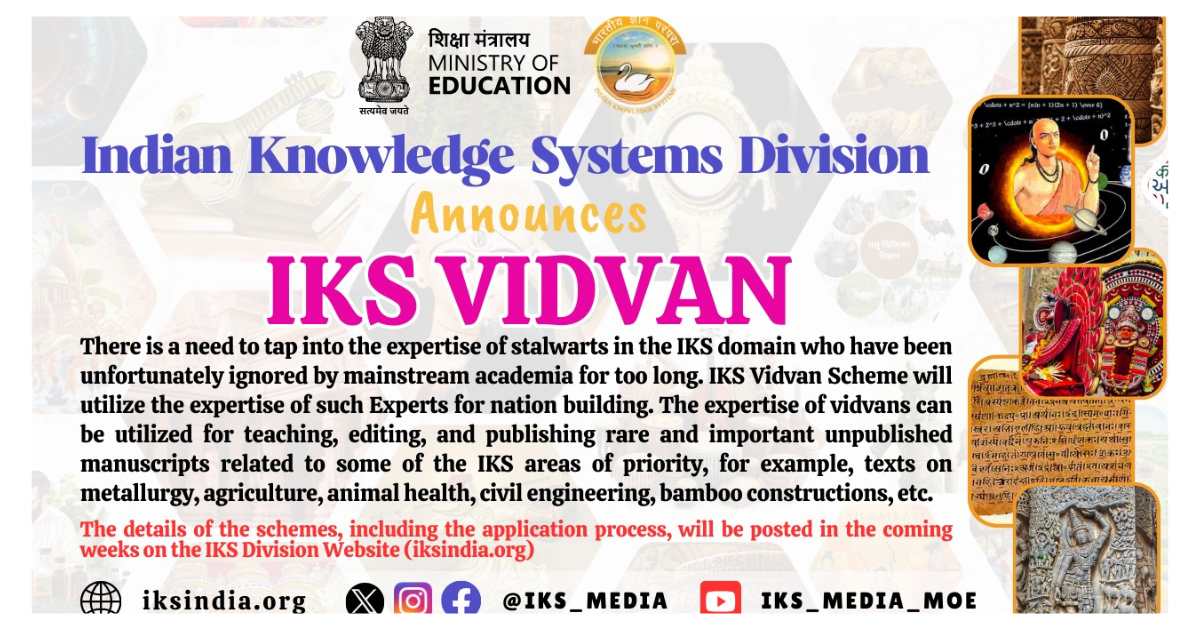
IKS Vidvan Scheme: Harnessing Expertise for Nation Building
The IKS Division of the Ministry of Education is pleased to announce the launch of IKS Vidvan, advancing the goals of NEP 2020. This scheme aims to engage eminent scholars in the Indian Knowledge Systems (IKS) domain, whose expertise has long been overlooked by mainstream academia. Through this initiative, their knowledge will be utilized for teaching, editing, and publishing rare and significant manuscripts in priority areas such as metallurgy, agriculture, animal health, civil engineering, and bamboo construction. Further details, including the application process, will be available on the IKS Division website
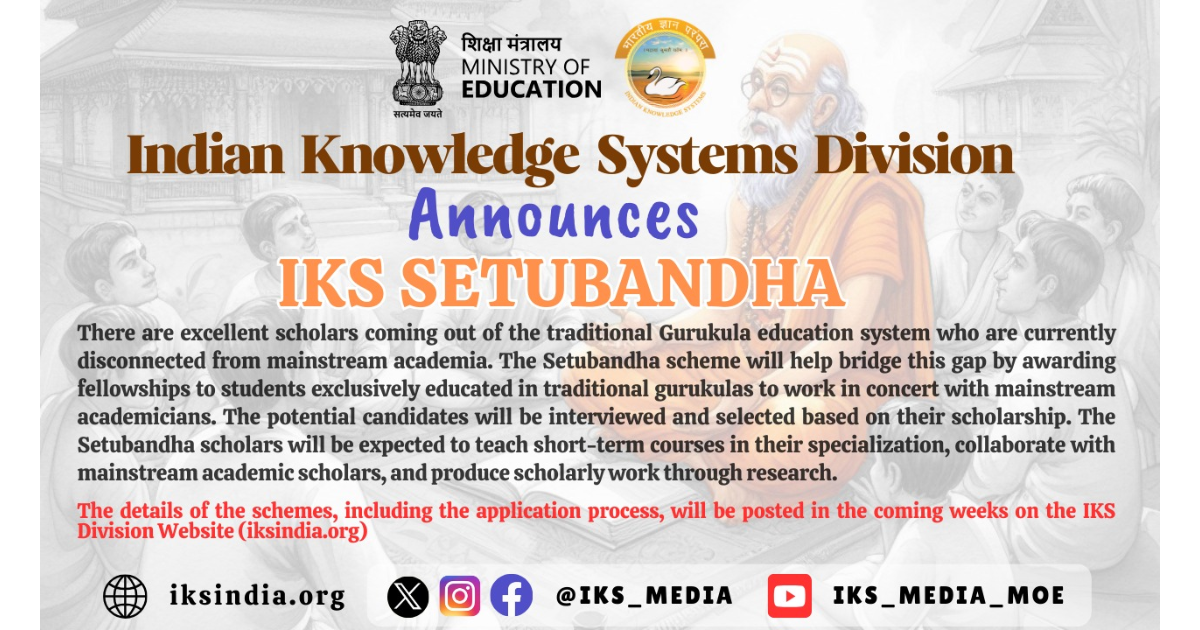
IKS Setubandha: Bridging Traditional and Mainstream Academia
The IKS Division of the Ministry of Education is proud to announce the launch of IKS Setubandha, further advancing the objectives of NEP 2020. This initiative aims to connect scholars from traditional Gurukula education systems with mainstream academia by awarding fellowships to deserving candidates. Selected scholars will collaborate with academic institutions, teach short-term courses in their areas of expertise, and contribute to scholarly research. Stay tuned for more details on the application process, which will be shared on the IKS Division website.
.png)
IKS Postdoctoral Fellowships: Nurturing Future Leaders in IKS
The IKS Division of the Ministry of Education is pleased to announce the launch of Postdoctoral Fellowships, advancing the goals of NEP 2020. Recognizing the pivotal role postdoctoral fellows play in transitioning to a lifelong research or academic career, the initiative aims to fill the funding gap for scholars in the IKS domain. These National Postdoctoral Fellowships will support the next generation of thought leaders, researchers, and faculty in Indian Knowledge Systems. Further details, including the application process, will be available soon on the IKS Division Website
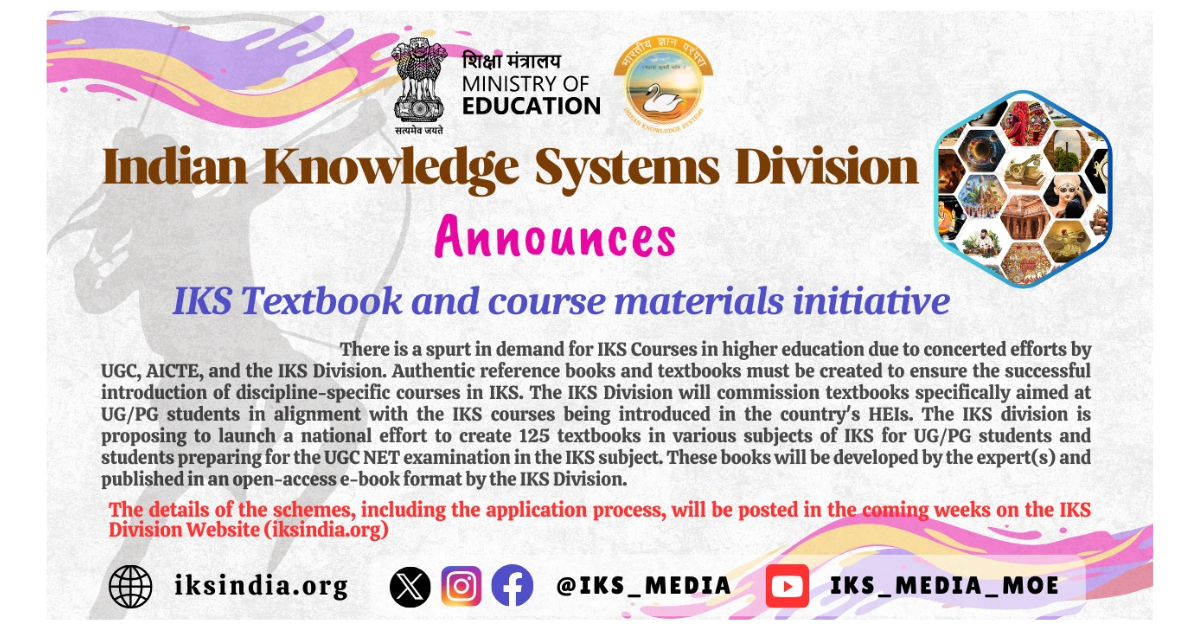
IKS Textbook and Course Materials Initiative
The IKS Division of the Ministry of Education is pleased to announce the launch of the IKS Textbook and Course Materials Initiative, further advancing the objectives of NEP 2020. With a growing demand for IKS courses in higher education, driven by the efforts of UGC, AICTE, and the IKS Division, the need for authentic and discipline-specific textbooks is crucial. To meet this need, the IKS Division is commissioning 125 textbooks, aimed at UG/PG students and UGC NET aspirants in IKS-related subjects. These textbooks, developed by subject experts, will be made available in an open-access e-book format, ensuring widespread accessibility and support for the successful introduction of IKS courses in the country's Higher Education Institutions (HEIs). Further details, including the application process, will be shared on the IKS Division Website
.png)
Bhāratīya-jñāna Suśruta Kāryakramā
The IKS Division, under the Bhāratīya-jñāna Suśruta Kāryakramā, invites faculty to apply for the role of Thematic Coordinator to lead the development of IKS Minors. This initiative aims to integrate Indian Knowledge Systems (IKS) into education by designing a series of Minors comprising 8-10 course papers, in alignment with UGC guidelines. Join us in this endeavor to bring the richness of IKS into the academic mainstream!
.png)
IKS Yaksha Prashna: Initiative by the Indian Knowledge Systems (IKS) Division
The IKS Yaksha Prashna platform is a digital treasure trove designed to preserve and celebrate India’s vast and diverse Knowledge Systems. It offers a rich repository of authentic content, including articles, documentaries, e-books, and more, showcasing the unique Indian perspective on learning across various fields. We invite scholars, enthusiasts, and practitioners to contribute articles in any Bhāratīya Bhāṣā, focusing on key themes such as Drsti, Paramparā, and Laukikaprayojana. Your insights and feedback are crucial to this initiative as we collectively shape the future of IKS. Explore, contribute, and engage with the platform by visiting the link below.
.png)
Integrating Tradition with Tomorrow: IKS Orientation at IIT Kanpur
On September 15th-16th, we delivered a lecture series titled, “Integrating Tradition for Tomorrow: Navigating Complex Futures through IKS” for the IKS Center at IIT Kanpur. Our team offered an orientation to multidisciplinary thought in IKS for global futures, the unity of knowledge in IKS, the building blocks of a civilization, and insights into sustainability from the IKS lens.
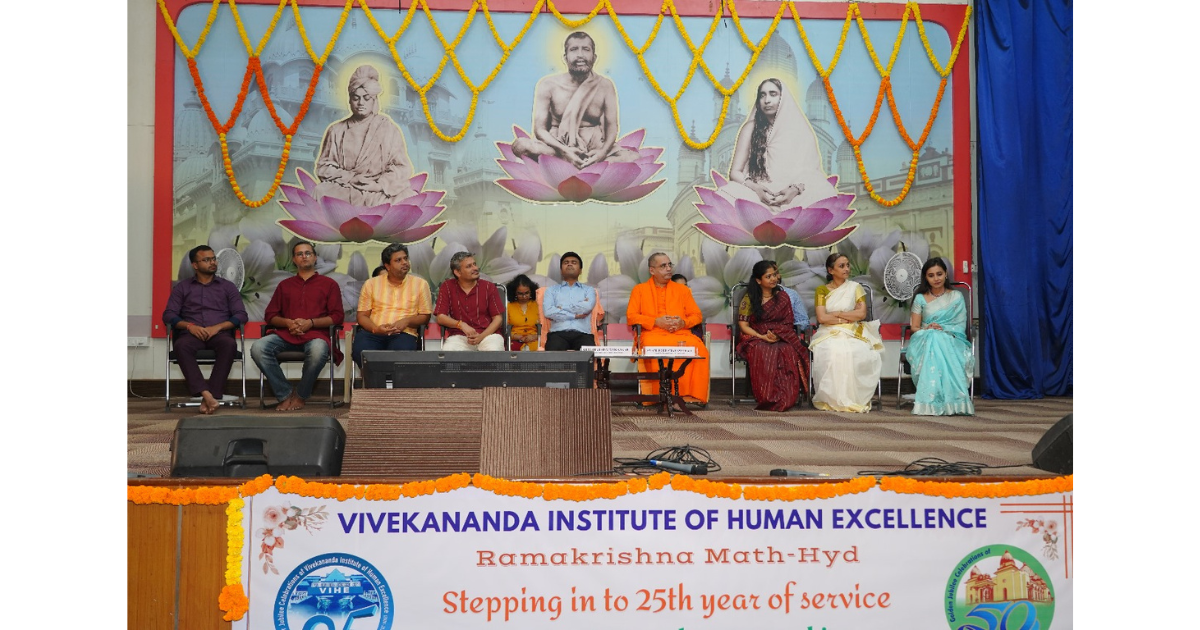
Campaign Launch with The Vivekananda Institute of Human Excellence
We were honored to associate with The Vivekananda Institute of Human Excellence (VIHE), Ramakrishna Matha, Hyderabad to serve their vision of instilling a love for and knowledge of Bharata in young minds, through the launch of the “Know India, Love India, Serve India” campaign.
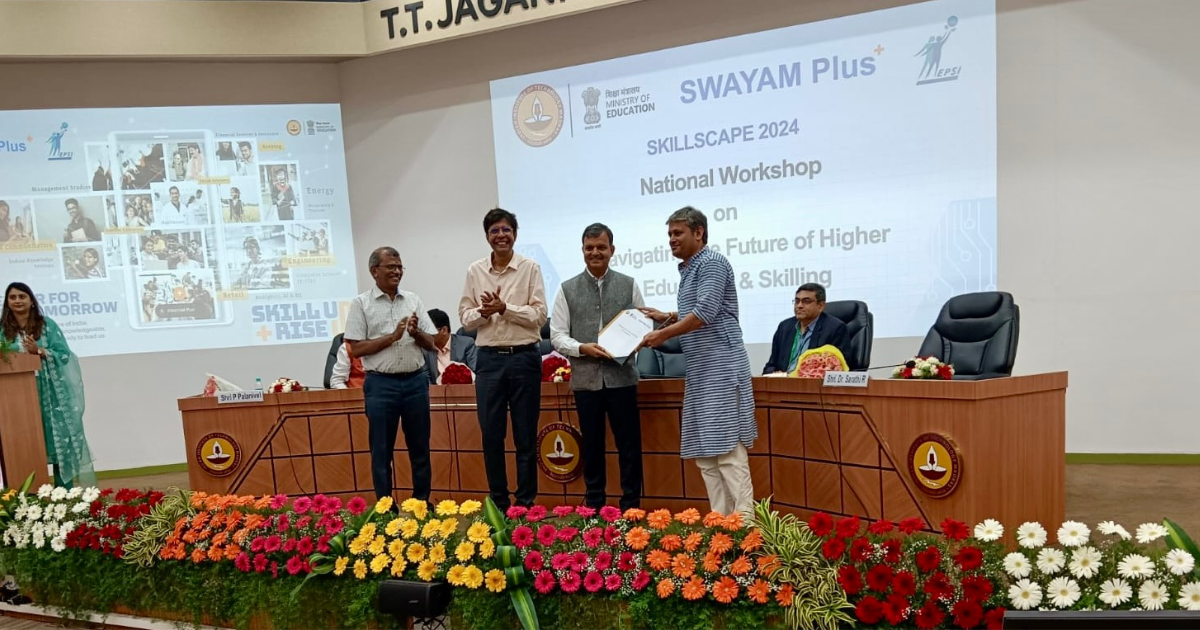
Partnership with Swayam Plus
On September 2nd, we signed an MoU with Swayam Plus as part of proceedings Skillscape 2024 at IIT Madras. Through this critical partnership, we aim to offer some of our key select courses on the Indian Knowledge Systems sector of the Swayam Plus Online Learning Portal. IKS is listed as one of the 12 sectors. A significant leap, as it ties IKS to the economy and skill market. The challenge and opportunity is to move IKS from "market skill" to a foundation for every sector, a worldview that every student carries. Our courses will focus on instilling a civilizational perspective as part of national strategy, facilitating the flourishing of the individual.
.png)
Mahābhārata: A World War
Gaurang Damani’s book, Mahābhārata: A World War, which presents the epic as a global conflict involving multiple civilizations, extending beyond Bhārata's borders. It explores the geographical and historical significance of places mentioned in the Mahābhārata, suggesting broader international connections. While some claims need further research, the book serves as an accessible overview of the epic's events, emphasizing its relevance in understanding ancient global interactions. The book highlights the importance of preserving the itihāsa’s narrative as more than just history.
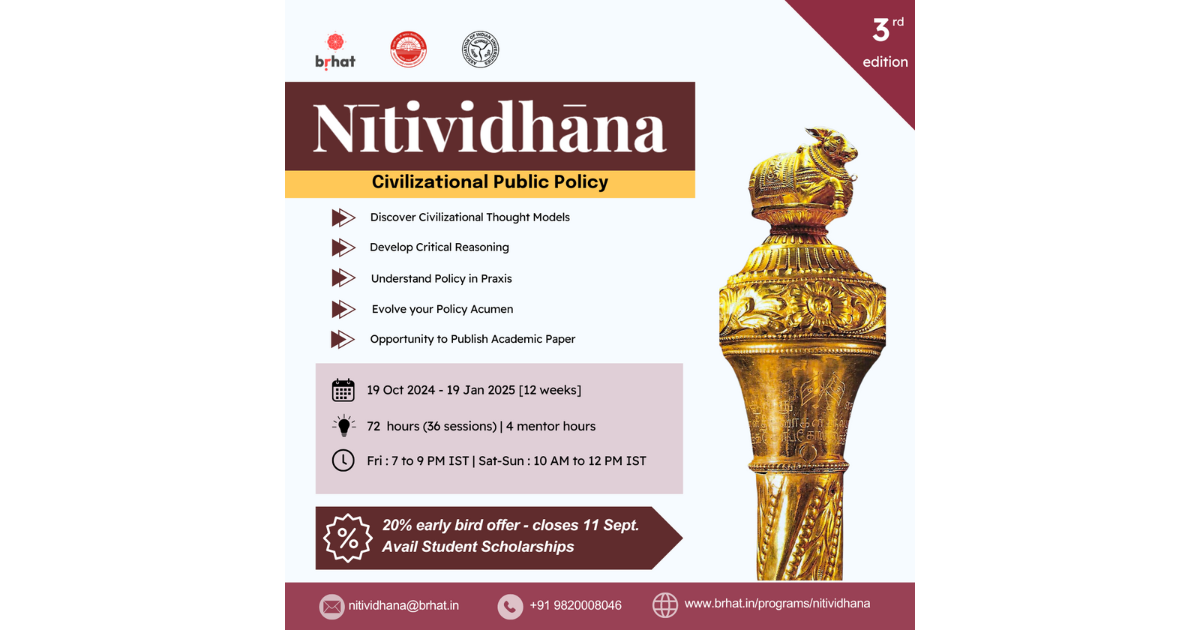
Nītividhāna 3.0
We announced the 3rd edition of our flagship program in civilizational public policy, Nītividhāna, this time in partnership with Chhatrapati Shahu Ji Maharaj University (CSJMU), Kanpur, and the Association of Indian Universities (AIU). At Nītividhāna, we seek to offer public policy rooted in Bhāratīya civilizational principles, that provide cogent answers to drive state action as well as inspire leadership potential. The course spans 12 Weeks across 72 Hours (36 sessions) + 4 Mentor Hours, culminating in a Public Policy Symposium.
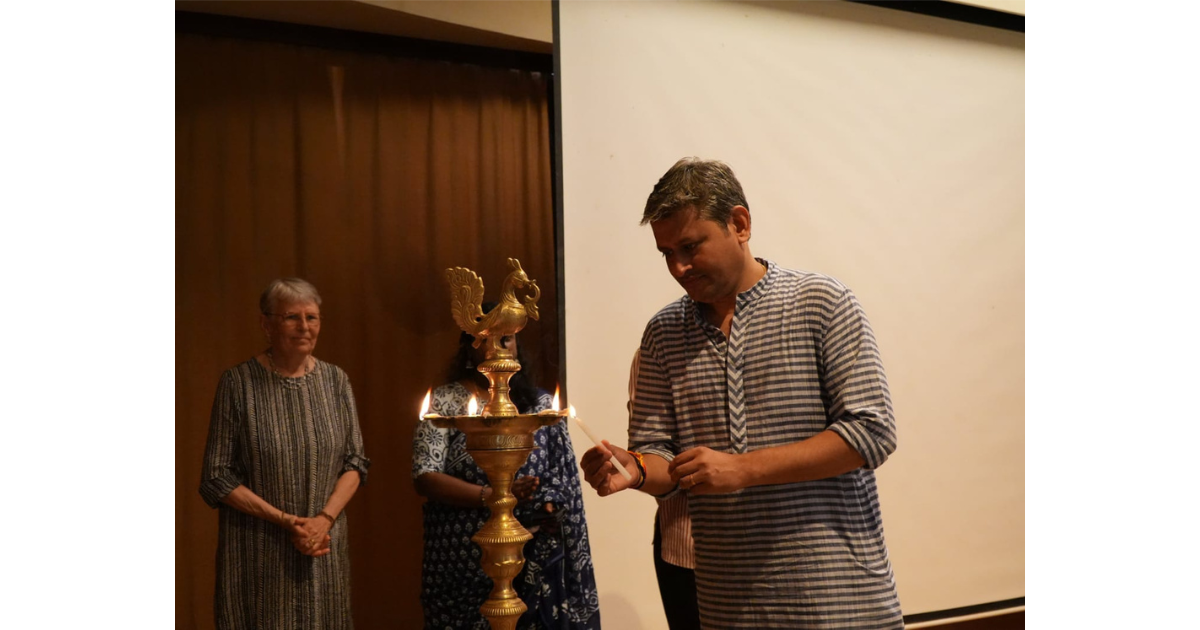
National Youth Camp at Auroville, Pondicherry
We were delighted to participate in the 4-day National Youth Camp organized by Auroville Foundation in August 2024. Shri Raghava Krishna had multiple interactions with the young, enthusiastic cohort through sessions on Sri Aurobindo and his vision for the youth of Bharata.
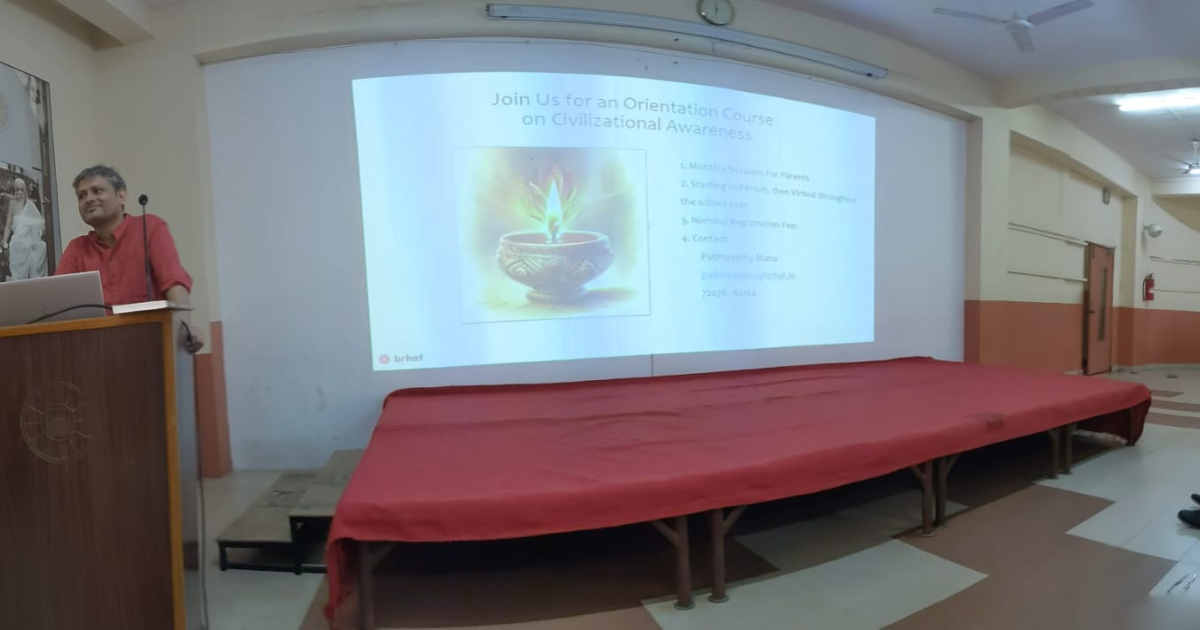
Pride in India Sessions for Students of SAIS
The Pride in India program is an annual offering for the students of 10th,11th and 12th grade of Sri Aurobindo International School (SAIS). As part of our partnership with the school, our team supported execution of the program by delivering 10 sessions from June 2024 - September 2024.
Ghṛtam - Pride in India Program Commences
On August 3rd, we delivered the 1st session for our flagship program, Ghṛtam: Pride in India, in partnership with Sri Aurobindo International School (SAIS). A cultural continuity program for parents, on overcoming generational & cultural differences today, 10 sessions are scheduled for the academic year, 2024-25.
.png)
AI and Indian Knowledge Systems
Brhat, in association with IIT Gandhinagar, executed a highly immersive workshop on AI and Indian Knowledge Systems: Cultivating Multidisciplinary Minds for Future Challenges on August 5-6, 2024. The workshop served as a platform for bringing together thought leaders and experts to build conversations at the crossroads of AI, IKS, and multidisciplinary approaches to addressing future challenges.
.png)
Kalidasa & Bhasa
Kalidas and Bhasa are two icons of Sanskrit literature and drama. Even today, they continue to attract stage performers with their unique style of crafting plays. We desire to introduce the literary gems of these two Dramatists to the connoisseurs through our new course on “Kalidasa and Bhasa: Two icons and two iconic plays.” We have curated two of their plays, namely अभिज्ञानशाकुन्तलम् and कर्णभारम् for this course.
Gujarat Young Thinker's Meet
Last week, we participated in the Gujarat Young Thinker's Meet at Auro University, Surat, where Pankaj Saxena highlighted the rich cultural legacy of India's festivals, and Anuraag Shukla discussed the nation's forgotten economic practices. The event also featured the soft launch of Śrī Rajiv Malhotra's book, The Battle of Consciousness Theory. Other notable speakers, including Śrī Ram Madhav, Śrī Bhargav Bhatt, and Śrī Vijay Singh Gurjar, engaged young intellectuals in exploring Bhārata's ancient traditions and knowledge systems. We look forward to more such programs across the nation.
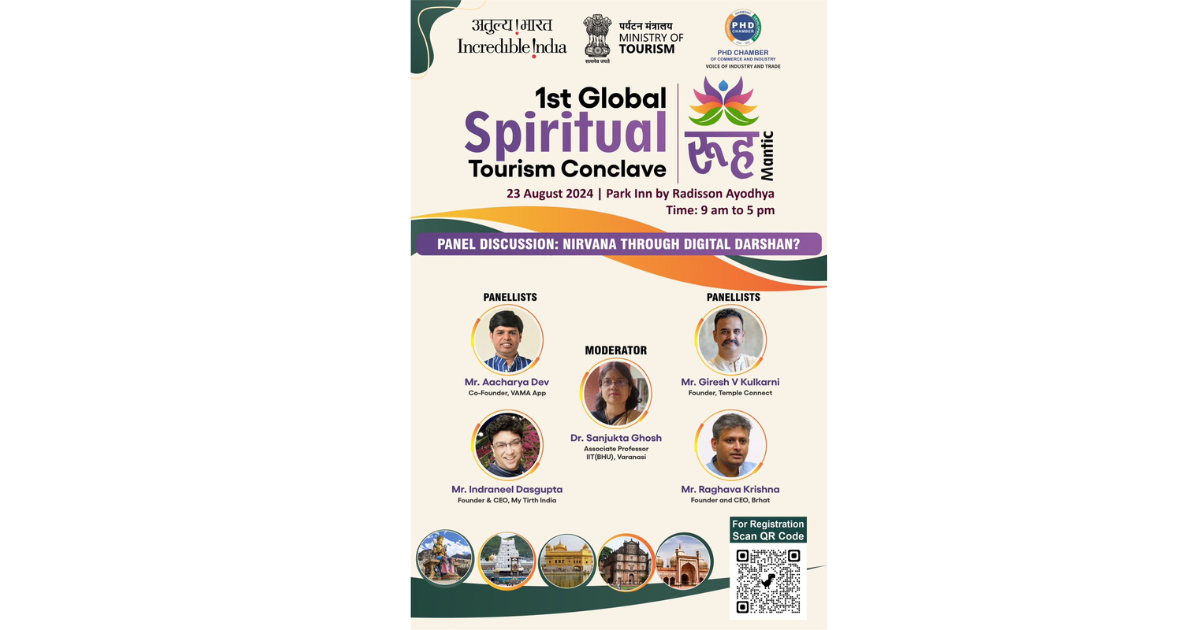
1st Global Spiritual Tourism Conclave Ayodhya
Join us for the 1st Global Spiritual Tourism Conclave organized by the PHD Chamber of Commerce and Industry (PHDCCI), a catalyst for promoting Indian industry, trade, and entrepreneurship for the past 119 years. This unique event will take place on 23rd August at Park Inn by Radisson, Ayodhya. Explore the convergence of spiritualism, technology, and civilizational knowledge systems. Gain insights into the economic potential of spiritual tourism, with opportunities to engage in creative workshops, one-on-one business meetings, and networking sessions with industry experts. Discover strategies for tapping into this lucrative market and access practical tools for promoting responsible travel. The conclave will also feature an exhibition platform to showcase pilgrimage sites
.png)
Punarāvartana: Reviving Circularity In Gaṇeśa Utsava
Join us for a live webinar on Punarāvartana: Reviving Circularity In Gaṇeśa Utsava Discover how Hindu philosophy inspires circularity in festivals. Learn the deep holistic science of visarjana. This Gaṇeśa Caturthī, let's honor Śrī Gaṇeśa, the deity of the mūlādhāra cakra (earth element), by reusing and recycling clay idols to protect our water bodies. SUN, 4 AUG | 11 AM - 12 PM
.png)
Exploring Digital Joys
Technology comes with risks, but it should be harnessed for its immense potential to enrich our lives. Often viewed negatively, technology can, in fact, enhance our experience of the nava-rasas—ranging from raudram, bhayānakam, and bibhatsyam to hāsya, karuṇā, adbhuta, śṛṅgāra, and even śānta. It offers the joy of community participation and the fulfillment of overcoming individual challenges. Few organizations within our civilizational movement recognize and promote this positive potential of technology. Pranava Institute is a notable exception, working to bridge generational and cultural gaps. They are hosting a workshop for youth aged 18-25 this Saturday, aiming to showcase how technology can facilitate and enhance these enriching experiences.
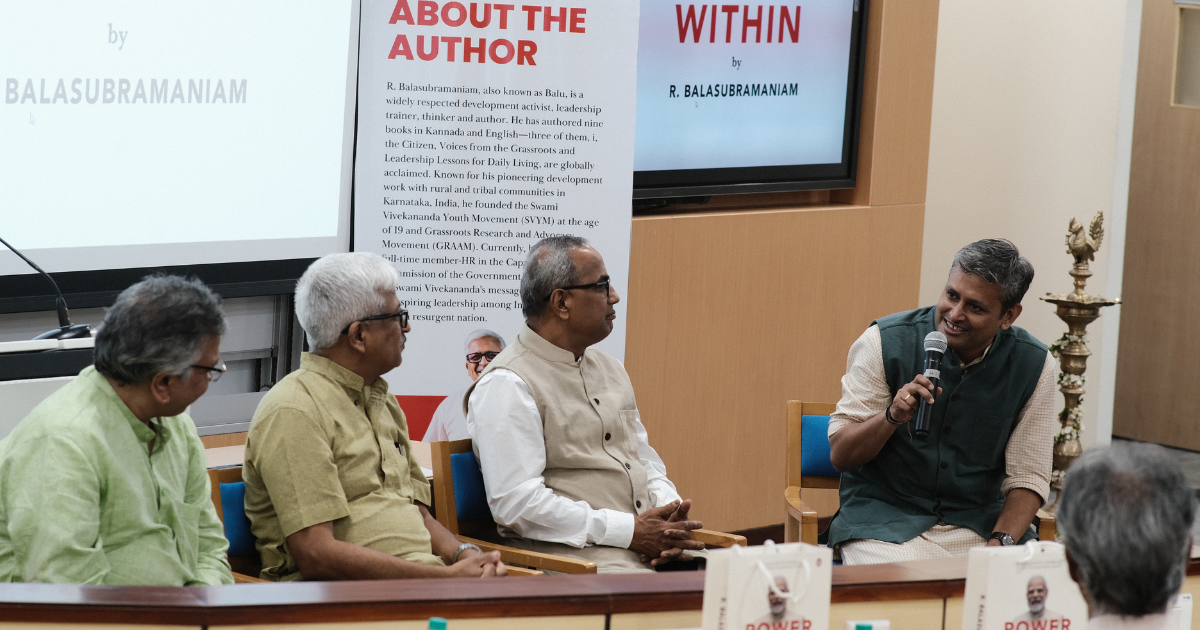
Launch of 'Power Within: The Leadership Legacy of Narendra Modi
Over the past two years, we have had the privilege of assisting Dr. R. Balasubramaniam in researching his latest book, Power Within: The Leadership Legacy of Narendra Modi. This groundbreaking work was officially launched last week in Bhagyanagar, in collaboration with the Indian School of Business (ISB), Hyderabad. The event was honored by the presence of distinguished guests including Prof. Madan Pillutla, Dean of ISB, Shri Narahimha Sharma, ASG of Telangana High Court, and Shri Nagaraj Paturi, Dean of INDICA. The book seeks to introduce and mainstream dharmic leadership principles into contemporary leadership discourses, using Prime Minister Narendra Modi's life as a case study. Dr. Balasubramaniam's insightful analysis aims to enrich leadership narratives with timeless wisdom drawn from dharmic traditions, offering a valuable perspective for current and future leaders.
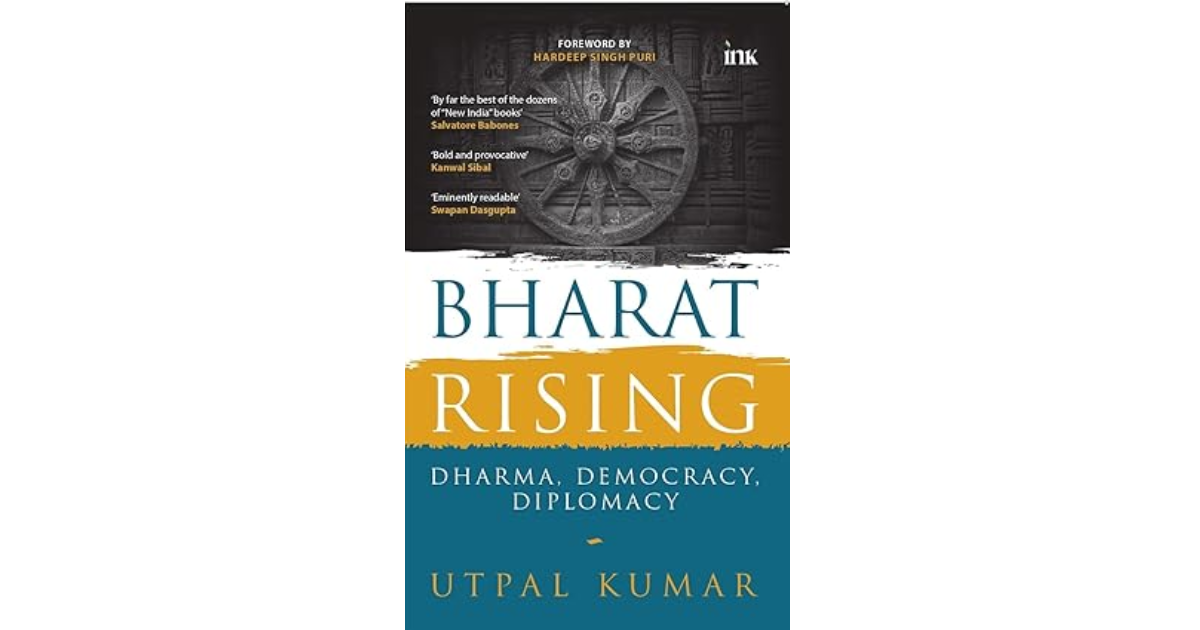
Bharat Rising
Bharat Rising provides a comprehensive analysis of India's ascent as a global power. It explores the nation's historical, cultural, and economic strengths, emphasizing the resurgence of India's indigenous knowledge systems and traditions. The book argues for leveraging these unique assets to foster national integrity and prosperity. Highlighting the importance of sustainable development and technological advancements, it calls for a balanced approach to growth that honors India's rich heritage while embracing modernity. The narrative is a powerful testament to India's potential to rise as a leader on the global stage by harnessing its inherent strengths and values.
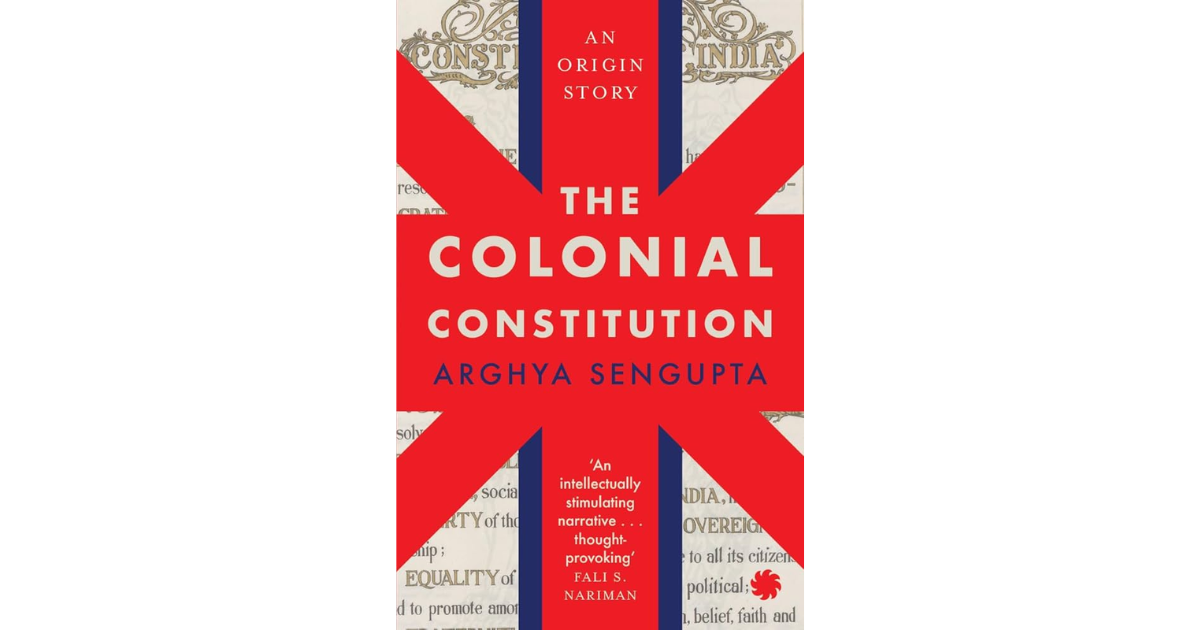
The Colonial Constitution
Arghya Sengupta's The Colonial Constitution critically examines how India's legal system, shaped by British rule, still influences modern governance. The book argues for decolonizing the legal and constitutional framework to better reflect indigenous values and contemporary needs. Sengupta emphasizes the need for constitutional reform to achieve true independence and justice, making a compelling case for shedding colonial remnants and aligning the legal system with India's own cultural and societal context.
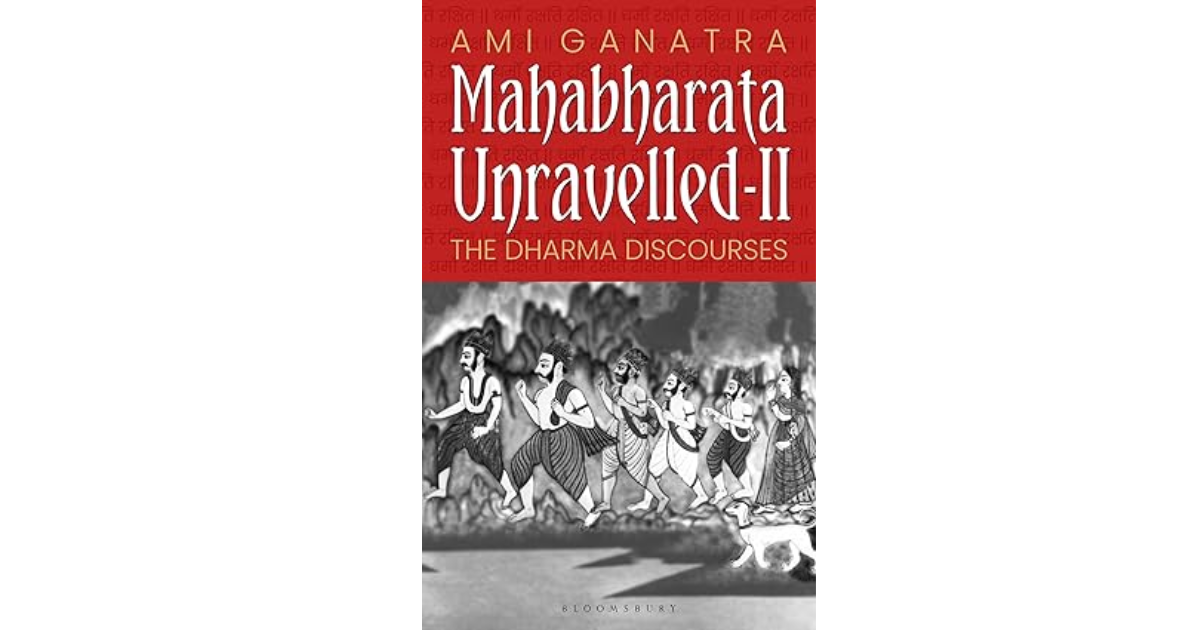
Mahabharata Unravelled II - The Dharma Discourses
Mahabharata Unravelled delves into the intricate layers of the Mahabharata, offering fresh insights and perspectives on this timeless epic. The article explores lesser-known narratives and characters, shedding light on the profound wisdom embedded within the text. It emphasizes the relevance of the Mahabharata's teachings in contemporary times, encouraging readers to draw parallels between the epic's moral dilemmas and today's societal challenges. Through a nuanced analysis, the piece invites a deeper understanding of the Mahabharata, showcasing its enduring significance and the timeless nature of its lessons.
.png)
India Inc. for Global Futures
In a landmark partnership, Brhat joins forces with the Indian Knowledge Systems (IKS) Division of the Ministry of Education, Government of India, launching the "India Inc. for Global Futures" initiative. This collaboration is set against the backdrop of a pressing 'Meta-crisis' - a confluence of environmental, economic, and social challenges that highlight the limitations of the current global paradigm, deeply entrenched in Western mechanistic views and often disregarding the interconnectedness and ethical dimensions of life. "India Inc. for Global Futures" seeks to transcend traditional anthropocentric perspectives, advocating for a shift towards a worldview that emphasizes universal well-being. By bringing together economists, industrialists, employers, and leaders, the initiative aims to acknowledge and address the broader debts that extend beyond financial returns, fostering a sustainable paradigm for the future inspired by the profound insights of Indian Knowledge Systems. This partnership represents a critical step forward in reimagining global futures through the prism of Bharatiya wisdom, promoting a more interconnected and ethical approach to addressing the world's most pressing challenges.
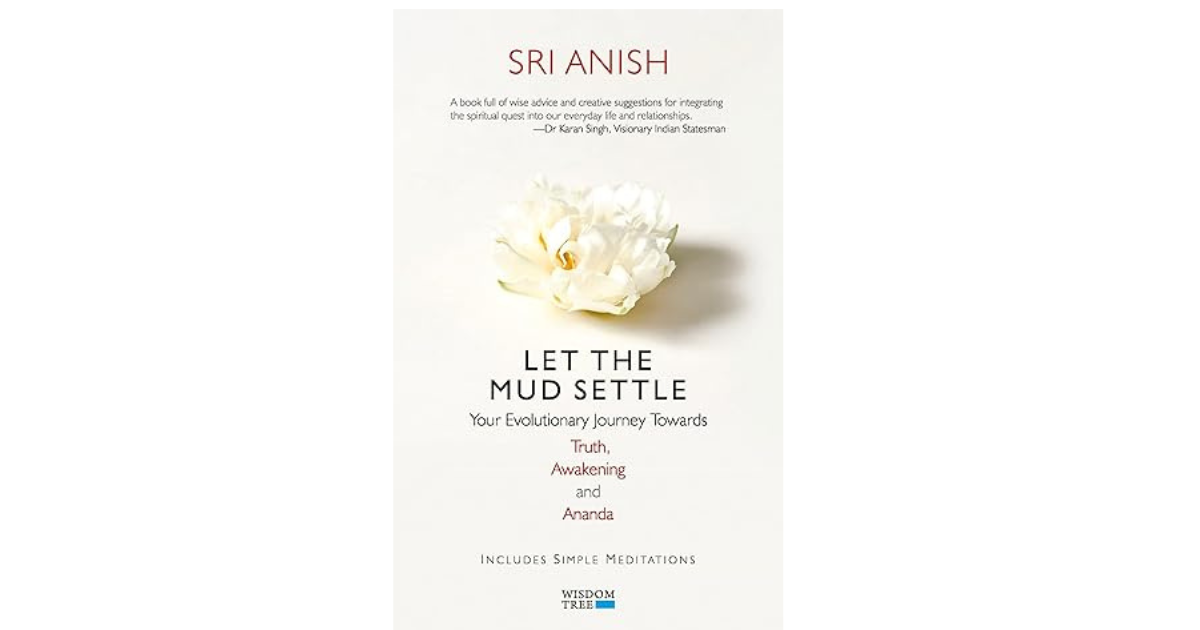
Let The Mud Settle: Sri Anish
In today's fast-paced world, where the hustle of work, family, and societal pressures often overshadows the essence of living in the moment, the book "Let the Mud Settle" emerges as a beacon of hope. It offers a compelling narrative that encourages readers to pause and rediscover the joy of being present. Through a blend of deep insights, enchanting stories, and contemporary teachings, this guide illuminates the path to finding one's true self amidst the chaos of daily life. It challenges readers to question their life's patterns, embrace authenticity, and practice mindfulness, leading to a state of lasting peace, happiness, and liberation from mental constraints. "Let the Mud Settle" is not just a book; it's a journey towards rediscovering the innate joy and innocence within, promising a life of fulfillment and mindful living.
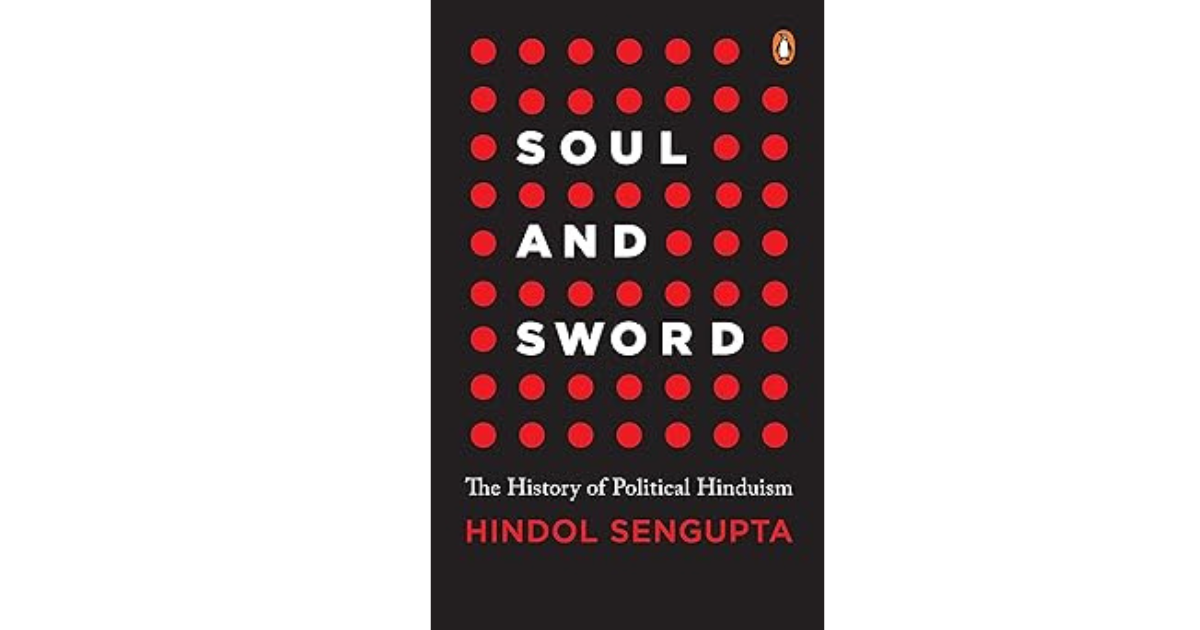
Soul And Sword
The article is a review of "Soul and Sword" by Hindol Sengupta, focusing on the evolution of political Hinduism and its historical roots. It highlights the transformation of Hindu dharma into Hinduism under colonial influence, emphasizing the loss of political and sovereign identity. The book explores the narrative identity of political Hinduism, tracing its history and ideological development. It argues for the necessity of incorporating Hindu principles in state operations and discusses the reformist nature of political Hinduism, urging a return to dharma-based governance
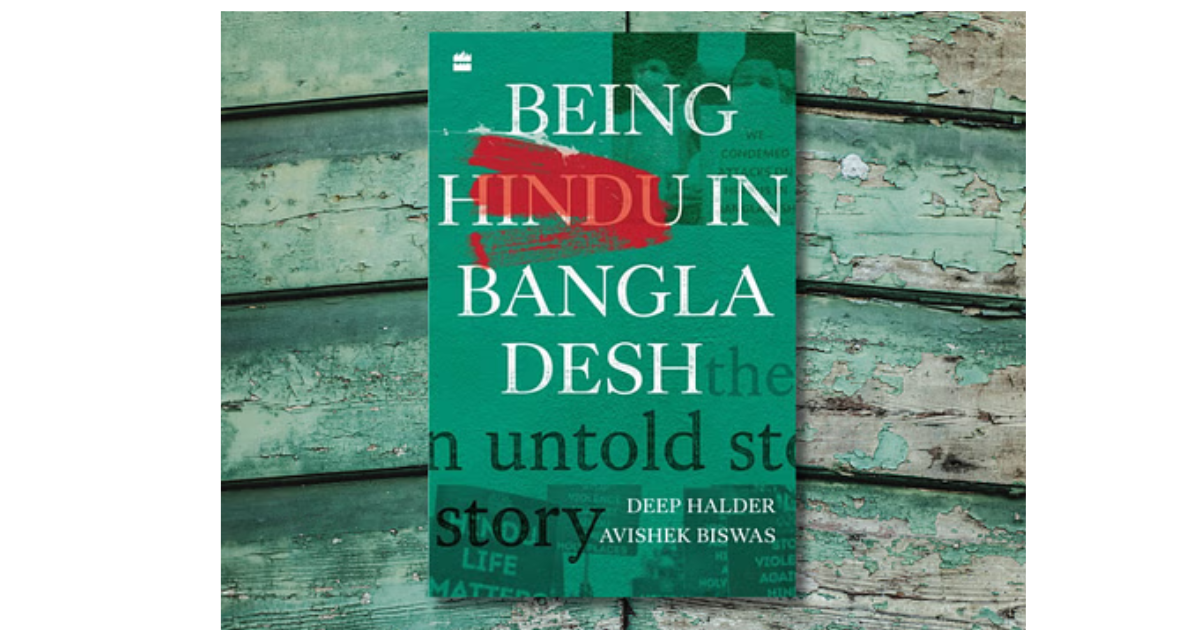
Being Hindu In Bangladesh
The article reviews the book "Being Hindu in Bangladesh" by Deep Haldar and Avishek Biswas, which explores the challenges Hindus face in Bangladesh due to religious extremism and historical subversions. The authors detail the conditions of fear and persecution Hindus live under, including incidents like the 2021 anti-Hindu riots. They argue that the plight of Hindus in Bangladesh is a consequence of both historic and contemporary political and social dynamics, advocating for a civilizational anchor in policy that respects the free practice of dharma. The book is presented as a must-read for understanding the complex interplay of religion, politics, and identity in the region.
.png)
18 Parvans of Mahabharata
The course acquaints us with textual reality. It unfolds the significant episodes of the Mahabharata through the exposition of the 18 parvans of the epic. The course is suitable for any participant with a preliminary knowledge of the Mahabharata. After the course, one will be acquainted with the textual reality of the epic, the basics of its philosophy, the characters' psychology, and the prevalent social paradigms. Conceptualized and coordinated by Dr. Gauri Moghe, the course's faculty members include (In order of lectures): Dr. Saroj Deshpande, Dr. Gauri Moghe, Dr. Sucheta Paranjpe, Dr. Prasad Bhide, Dr. Amruta Natu, Dr. Shreenand Bapat, Dr. Maithili Joshi, Mr. Manish Walvekar, Dr. Madhavi Kolhatkar, Dr. Pradeep Apte, Dr. Mugdha Gadgil, and Dr. Manjusha Gokhale.
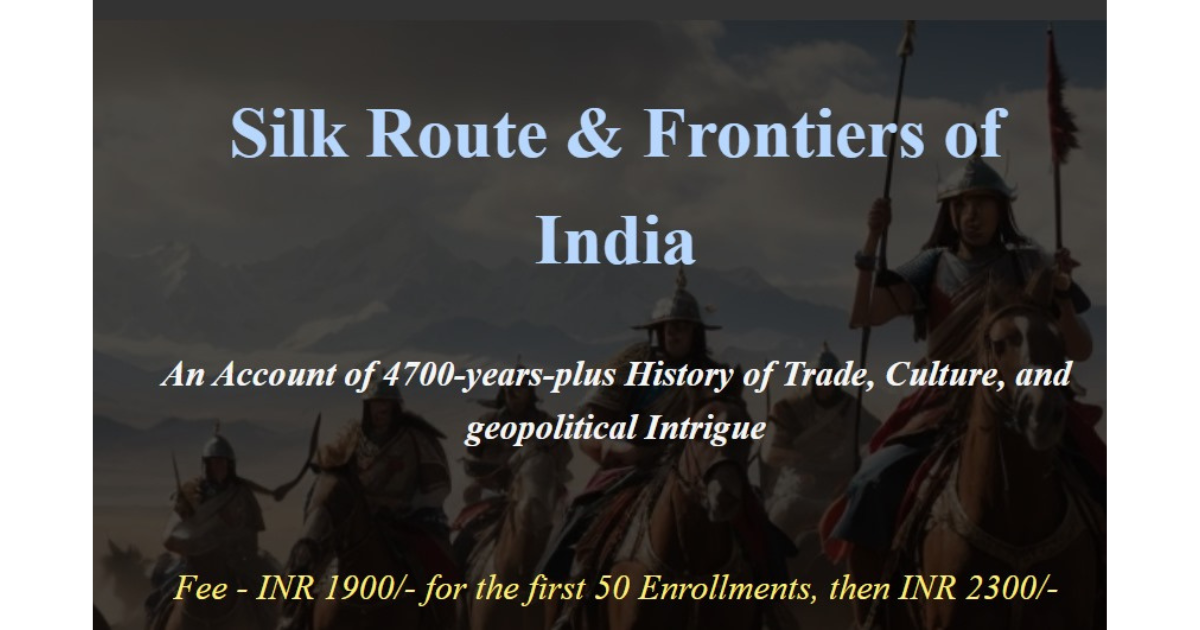
Silk Route & Frontiers of India
The Silk Route, a 6,437-kilometer lifeline stretching across continents, ushered prosperity and the quest for a better life across borders. The connections with the Silk Route defined the destiny of India's frontier regions, and have thus shaped India's political history. Authored by Mr. Sanjay Sonawani. this course is an exploration of this rich tapestry of history. This course consists of 8 hours of videos, Transcripts, supplementary material, reflective exercises, and a list of suggested readings. This course is well-suited for beginners with no prior understanding of the topic
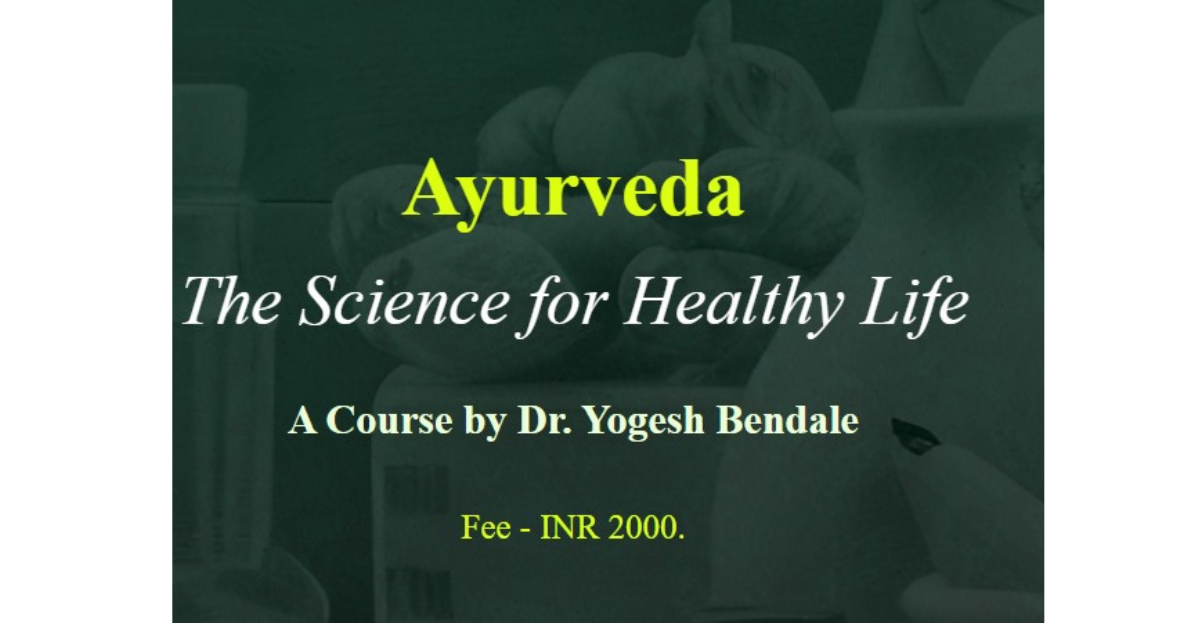
Ayurveda Science For Helthy Life
In this course, we Learn about the Tridoshas—Vata, Pitta, and Kapha—and their crucial role in maintaining health. We explore the seven body tissues, waste products, and the body's vital points. We gain insights into the digestive process, metabolic essence, and the mind's impact on health. We understand individual constitutions (Prakriti) and how daily and seasonal routines influence our well-being. We cover dietary guidelines, food incompatibilities, and principles of disease resistance. The course also includes practical aspects like clinical examination, treatment methods, and detoxification techniques. This course is designed and delivered by Dr. Yogesh Bendale with the assistance of Dr. Pravin Gund.
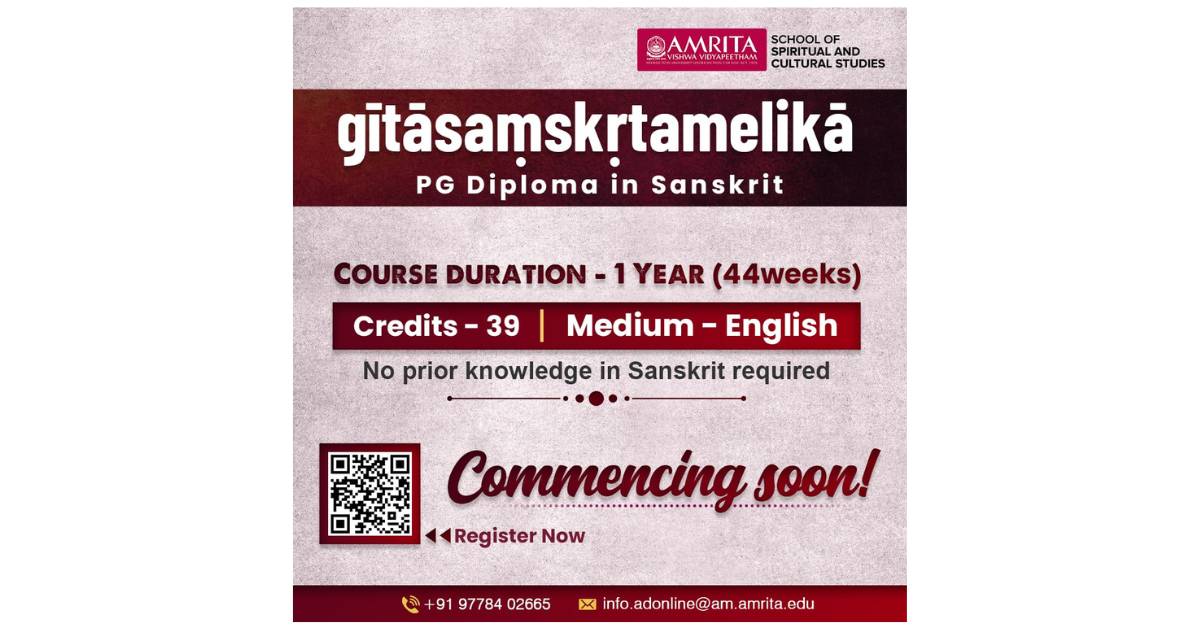
gītāsaṃskṛtamelikā: PG Diploma in Sanskrit
The Amrita School of Spiritual and Cultural Studies at the Amritapuri campus is delighted to announce the commencement of a PG Diploma Program in Sanskrit. This program offers an in-depth exploration of the devabhasha, providing students with the opportunity to enrich themselves with knowledge of this classical language.
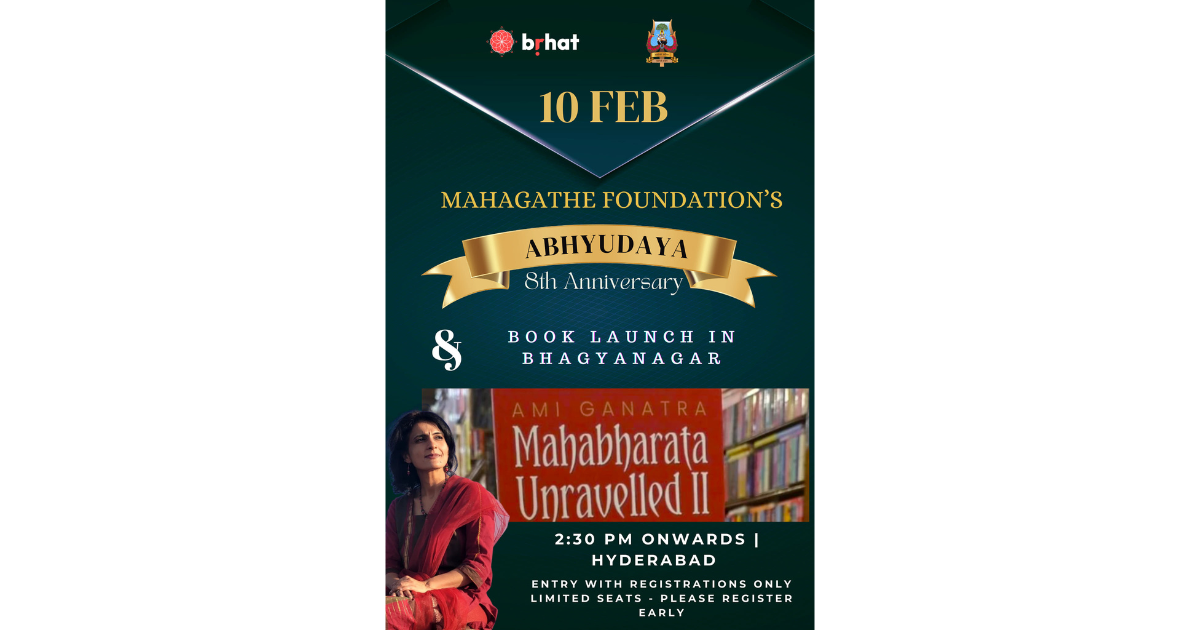
Mahagathe Foundation's Abhudaya
Abhyudaya 2024, derived from "Abhi" (towards) and "Udaya" (rise, ascent), symbolizes the journey towards enlightenment. Celebrating the 8th year of mahagathe Foundation's service towards elevating our consciousness in dharma, this year's highlight is the launch of Ami Ganatara's book Mahabharata Unravelled 2
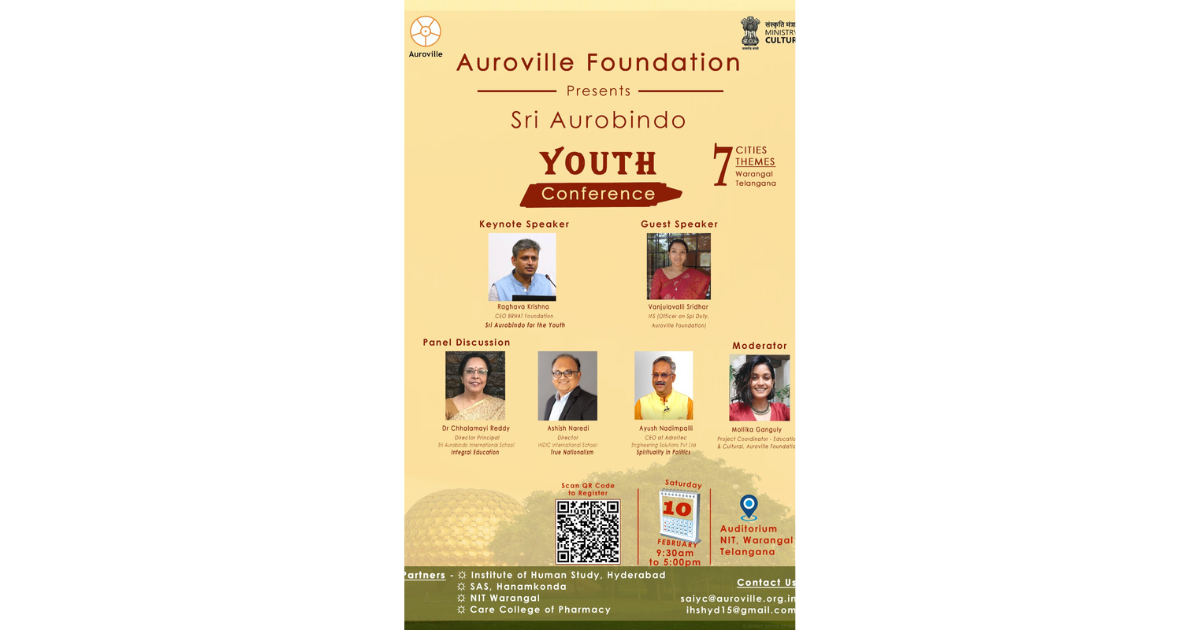
Sri Aurobindo Youth Conference
At Bṛhat, Sri Aurobindo's School of Bhavani Bharati is the foundation. In furtherance of one of our key partnerships with Sri Aurobindo International School (Hyderabad), we are honored and grateful to participate in the Sri Aurobindo Youth Conference being organized by Auroville Foundation in collaboration with the Ministry of Culture, GoI. Shri Raghava Krishna will speak to a vibrant, young audience on the essence and criticality of Sri Aurobindo's Thoughts for the Youth.
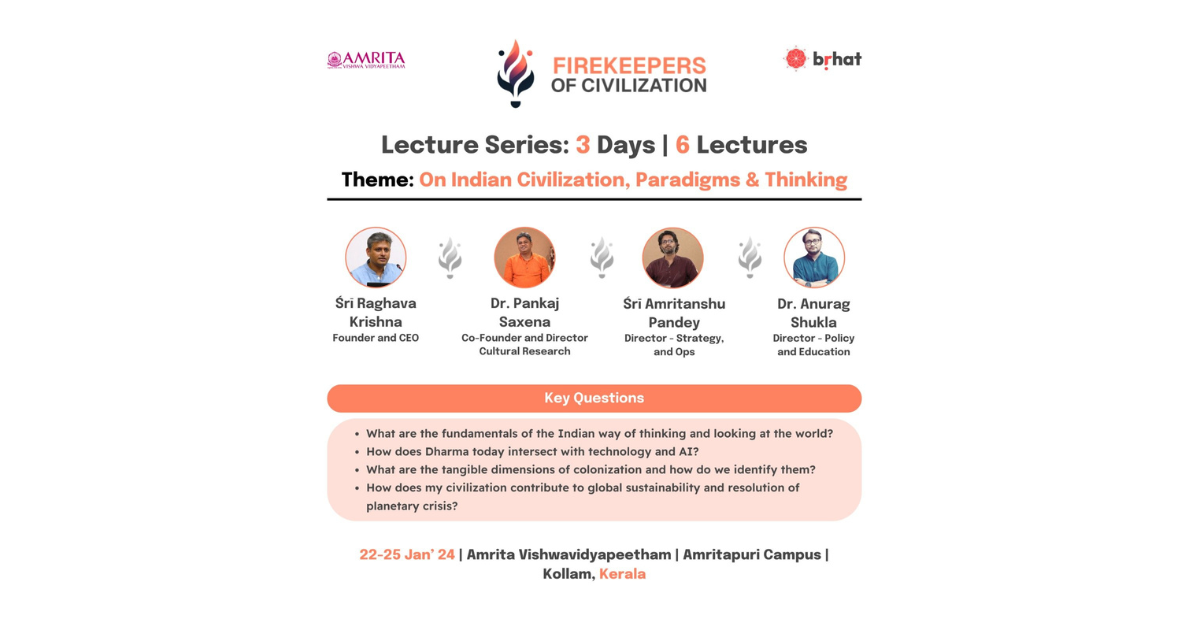
Firekeepers Of Civilization
The collaboration with Amrita School of Spiritual and Cultural Studies at Amrita University marked the initiation of a transformative endeavor – "The Firekeepers of Civilization." This initiative aims to nurture a new generation of leaders steeped in dhārmika wisdom and civilizational insights. Through a series of lectures from January 22 to 25, 2024, participants delved into foundational aspects of Indian thought, explored the intersection of dharma with technology and AI, identified tangible impacts of colonization, and embraced a civilizational approach to sustainability. This event served as a catalyst for fostering cultural awareness, empowering leaders for global challenges, and fostering strong academic partnerships.
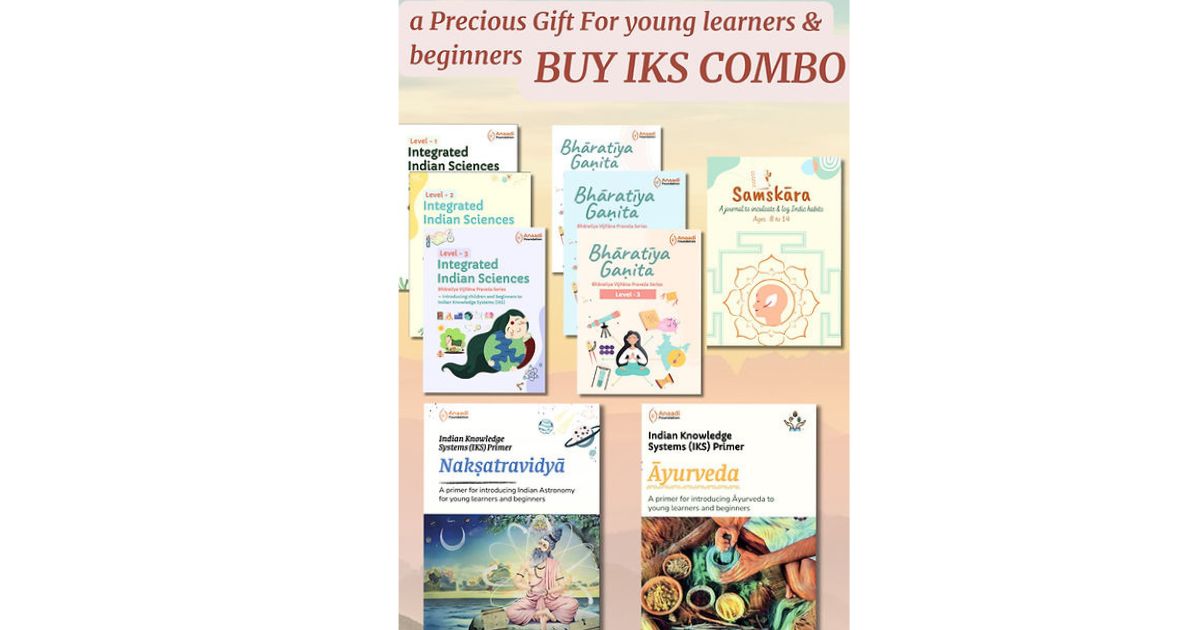
IKS Books by Anaadi Organisation
While mainstream textbooks often provide a Euro-centric view of knowledge, Indian Knowledge Systems (IKS) books under under BVP and IKS introduce learners to India's rich scientific and philosophical legacy, from luminaries like Patanjali to Āryabhaṭa. These books offer holistic knowledge, from Ayurvedic wellness principles to Indian mathematical constructs, blending values and innovation. By integrating IKS, students gain a comprehensive understanding of India's intellectual heritage, aligning with the vision of the new National Education Policy.
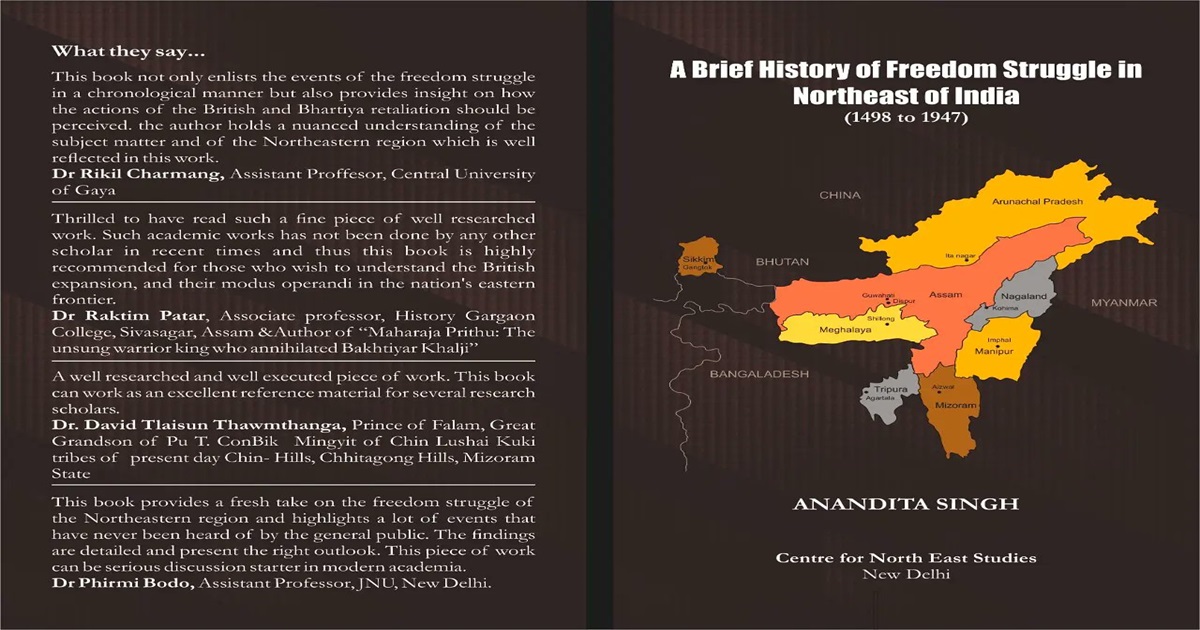
A Brief History of Freedom Struggle in Northeast of India 1498-1947
The article delves into the underrepresented history of Northeast India's resistance against European colonization, based on Anandita Singh’s book, ‘A Brief History of Freedom Struggle in Northeast of India’. Challenging mainstream narratives, the piece highlights the region's organic freedom movement, the strategic maneuvers of the British, and the tragic cultural and religious shifts. Singh's work stands as a testament to the Northeast's invaluable contributions to India's fight for independence.
.png)
A Beginner's Guide to Dharmashastra Course by BORI
Gain a Comprehensive Introduction to the Founding Ethos of Hinduism; Inspired by Panduranga Vaman Kane, and his magnum opus, the History of Dharmashastra, this course is an invitation to explore the multi-layered nature of Dharma philosophy that weaves its intricate threads into every aspect of your life. The odyssey of 25 sessions, delivered by renowned experts, unravels the meaning and the scope of Dharma. From its ancient roots to its contemporary significance, you'll gain a comprehensive understanding of the living, breathing force that is Dharma.
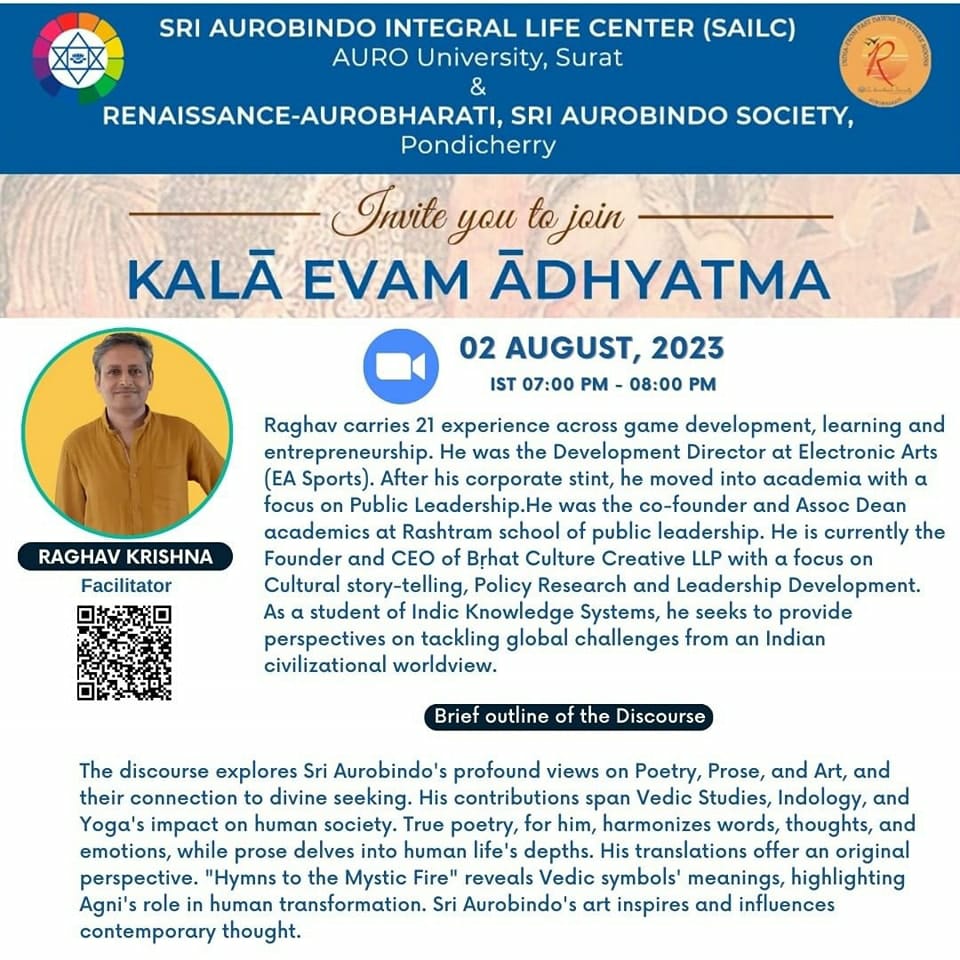
Kalā Evam Ādhyātma - SAILC, Auro University
Sri Raghava Krishna was invited for a discourse, “Kalā Evam Ādhyātma” jointly organized by Sri Aurobindo Integral Life Center (SAILC), Auro University, Surat and Renaissance - Aurobharati, Sri Aurobindo Society, Pondicherry on 2nd August, 2023 from 7 PM - 8 PM IST. An online discourse that delved into Sri Aurobindo’s profound views on poetry, prose, art and their connection to divine seeking, it also reflected upon how his works in the realms of art, prose and poetry continue to inspire and influence contemporary thought even today. It was a humble exposition on the ideas of a Master to whom poetry harmonizes words, thoughts and emotions and prose offers a deep dive into the depths of human life; who composed the magnum opus, “Savitri” and deciphered the mystical revelations of the Vedas as it is.
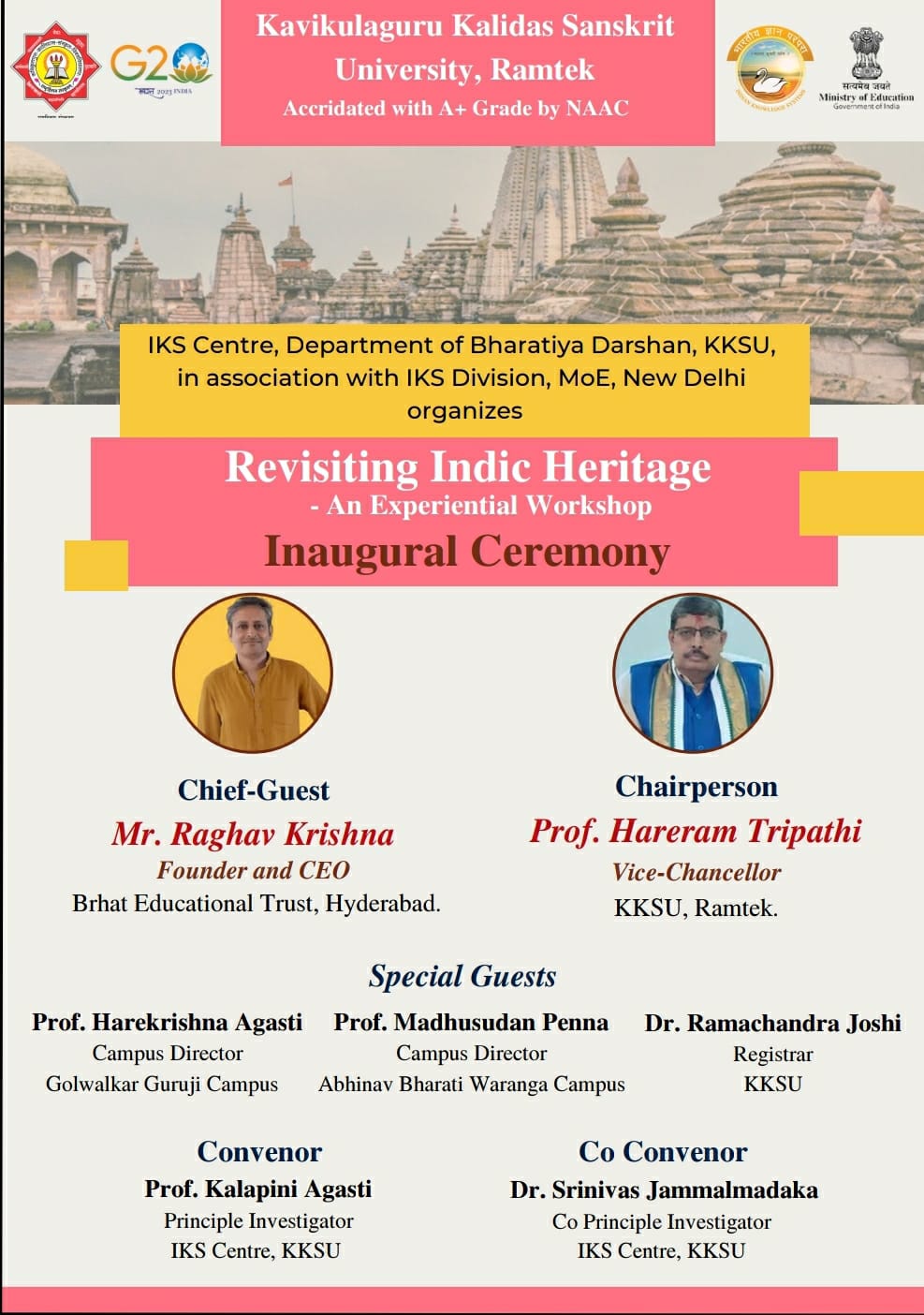
Revisiting Indic Heritage - An Experiential Workshop Inaugural Ceremony, KKSU, Ramtek
The IKS Centre, Department of Bharatiya Darshan, Kavikulaguru Kalidas Sanskrit University (KKSU) in association with the IKS Division of the Ministry of Education organized a 5-day experiential workshop on “Revisiting Indic Heritage, the inauguration of which was held on 1st August, 2023. Sri Raghava Krishna, had the opportunity to be present in the event as the Chief Guest alongside stalwarts and scholars who graced the occasion with their presence. He spoke about why the time now is ripe for IKS and delved into the applications that the millennia-long tradition of Bhāraṭiya Jñāna Parampara offers to contemporary times.
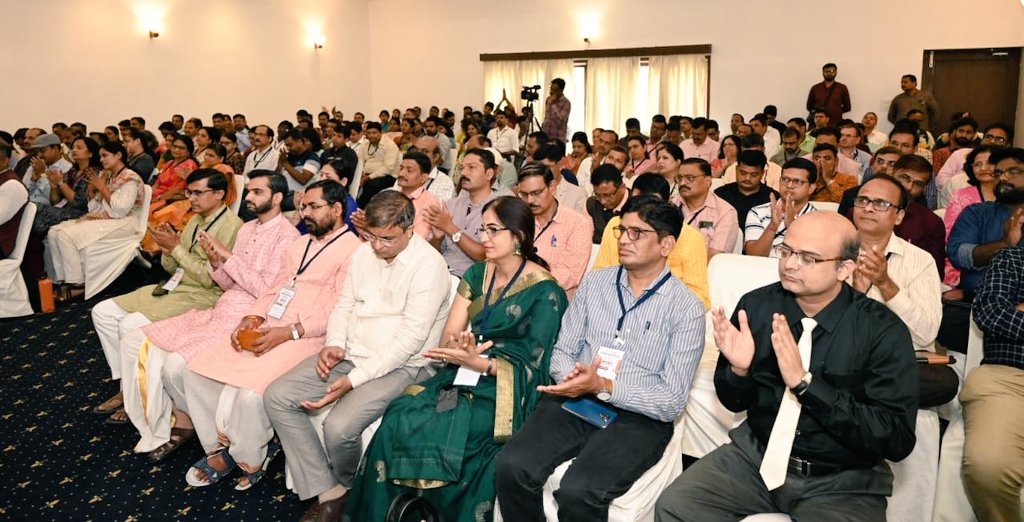
Faculty Training Programme in IKS by the UGC
The Indian Knowledge Systems (IKS) Division at the Ministry of Education, conducted the 1st of the set of Faculty Training Programmes (FTP) in collaboration with the University Grants Commission (UGC) at the HRDC in Nagpur, Maharashtra. The FTP at Nagpur, commencing on 31st July, 2023 and concluding on 5th August, 2023 witnessed around 180 faculty members from higher educational institutions receive interactive training in curriculum development and delivery within the Indian Knowledge Systems across domains such as Ayurveda, Temple Management, Inter-Civilizational discourse, an extensive overview of IKS, etc. Dr Pankaj Saxena (Co-Founder & Director of Cultural Research, Bṛhat) and Sri Raghava Krishna (Founder & CEO, Bṛhat) had the opportunity to address the faculty members on Temple Management and Inter-Civilizational Discourse on 31st July-1st August and 3rd-4th August, respectively. Dr Pankaj Saxena spoke to the audience about the Hindu Temple as a case study, its importance in civilizational memory, its many meanings and centrality to the society as a central for culture, economics, sustainability and scholarship and Sri Raghava Krishna addressed them on Bhārata as a millennia-long continuous civilization, the ontology and epistemology of her effervescent knowledge traditions, why they are pregnant with solutions to modern day challenges, how they have impacted the world since centuries and why and how they can be made a part of our curriculum today.
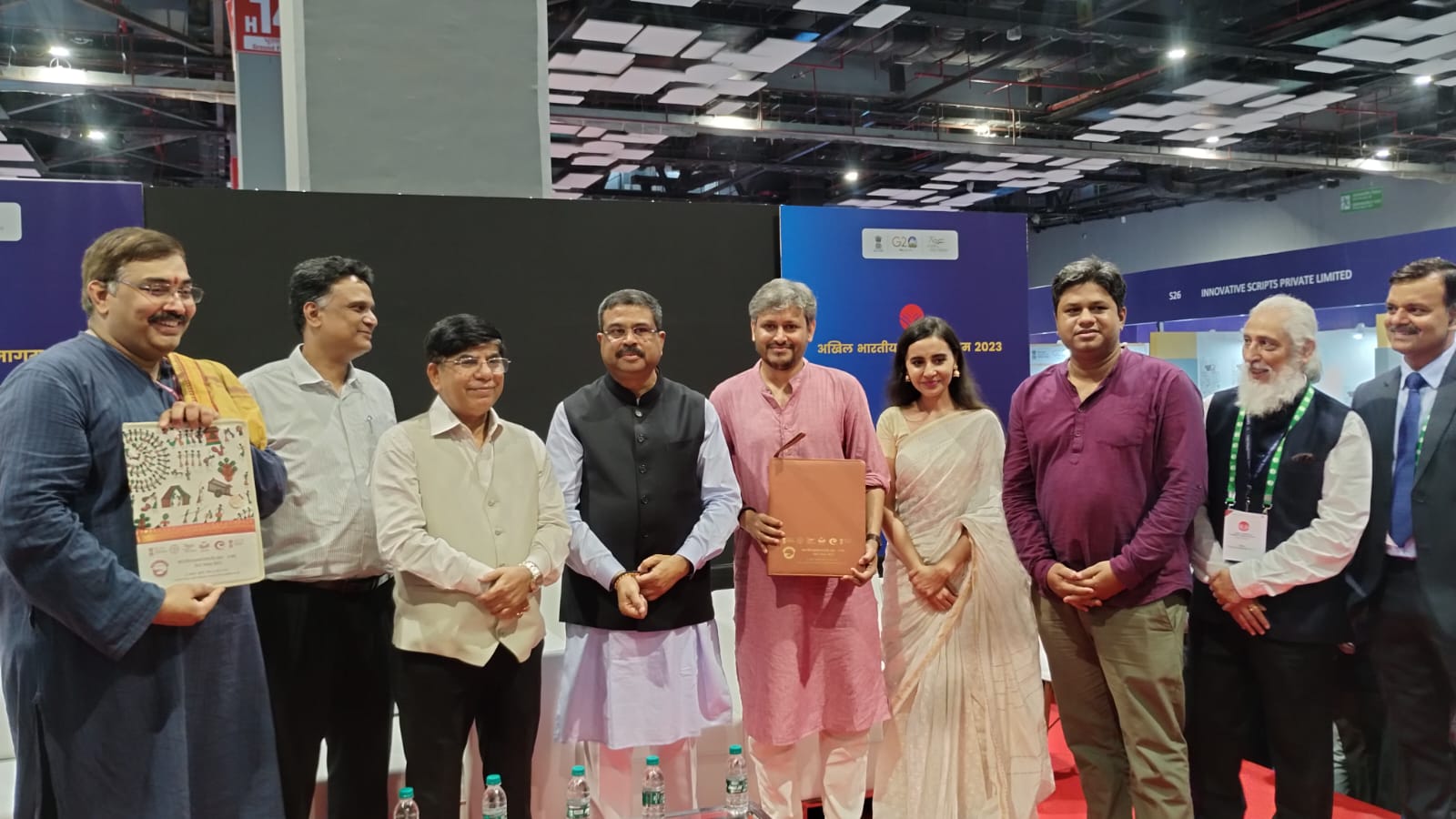
An MoU with Indian Knowledge Systems Division, Ministry of Education
On 29th July 2023, Brhat had the honor of signing an MoU with the Indian Knowledge Systems Division, Ministry of Education at the inauguration of the Akhil Bharatiya Shiksha Samagam, 2023 to further initiatives in the areas of IKS-centered education and culture compatible public policy. The event was aimed to create a forum where academics, sector experts, policy makers, industry representatives, teachers, and students could come together to exchange their perspectives, success stories, and best practices in implementing the NEP 2020. We announced two courses on this occasion: Design Thinking for Excellence in Public Services, from civilizational perspective Nītividhāna: A course on Indic Public Leadership, moving beyond theory to practice and make culturally sensitive decisions in governance roles
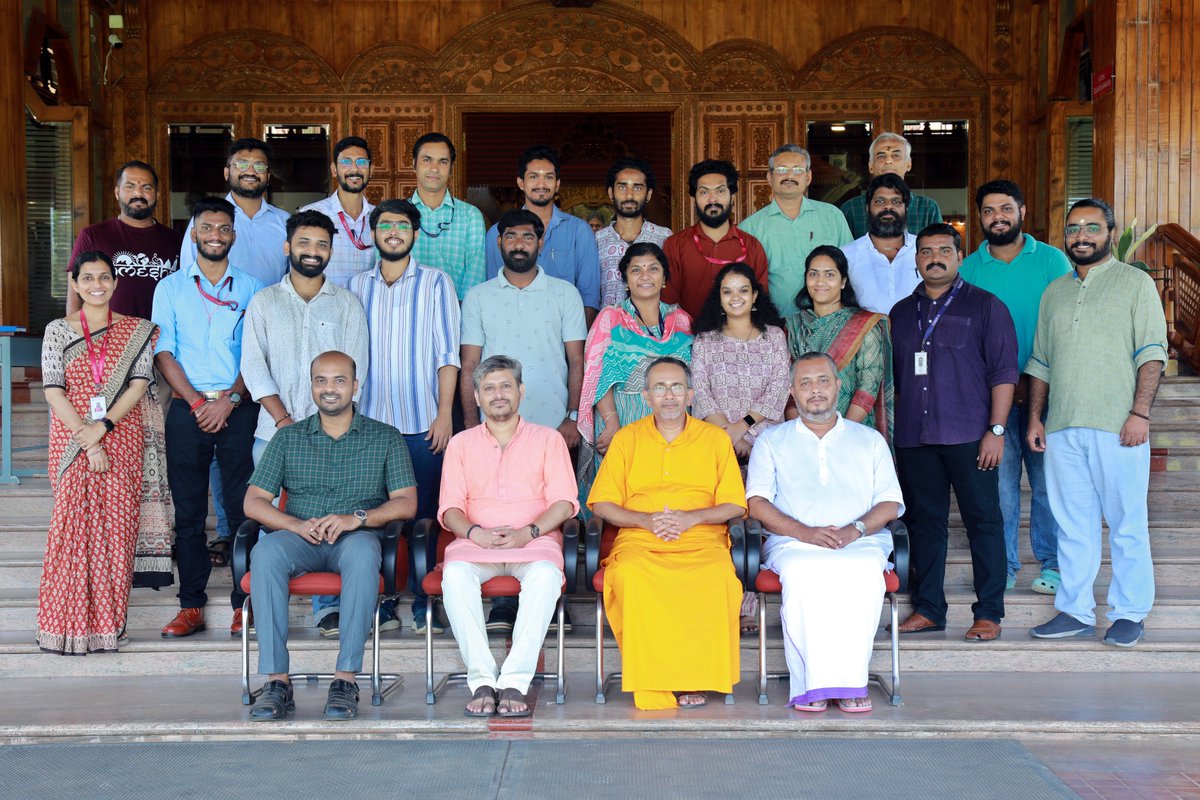
Invited Talks at Amrita School of Spiritual and Cultural Studies, Amrita University
On 21st July 2023, Shri Raghava Krishna had the blessing and honor to deliver two key talks for an interdisciplinary faculty team at Amrita School of Spiritual and Cultural Studies, Amrita Vishwavidyapeetham, Kollam, Kerala. He addressed the audience on the essentiality and praxis of ‘Civilizational Policy Making’ and delivered a Faculty Development Programme on ‘A Cognitive Shift to Solve Global Crises’ where he highlighted the ontology, epistemology, axiology and praxis of the Indian Knowledge Systems and why it is critical to solve the indomitable issues we face world-over today. We were humbled and inspired by the goodwill of the faculty and students alike and the grace of Amma and as institutions we seek to further a shared vision with strategic collaborations in the future.
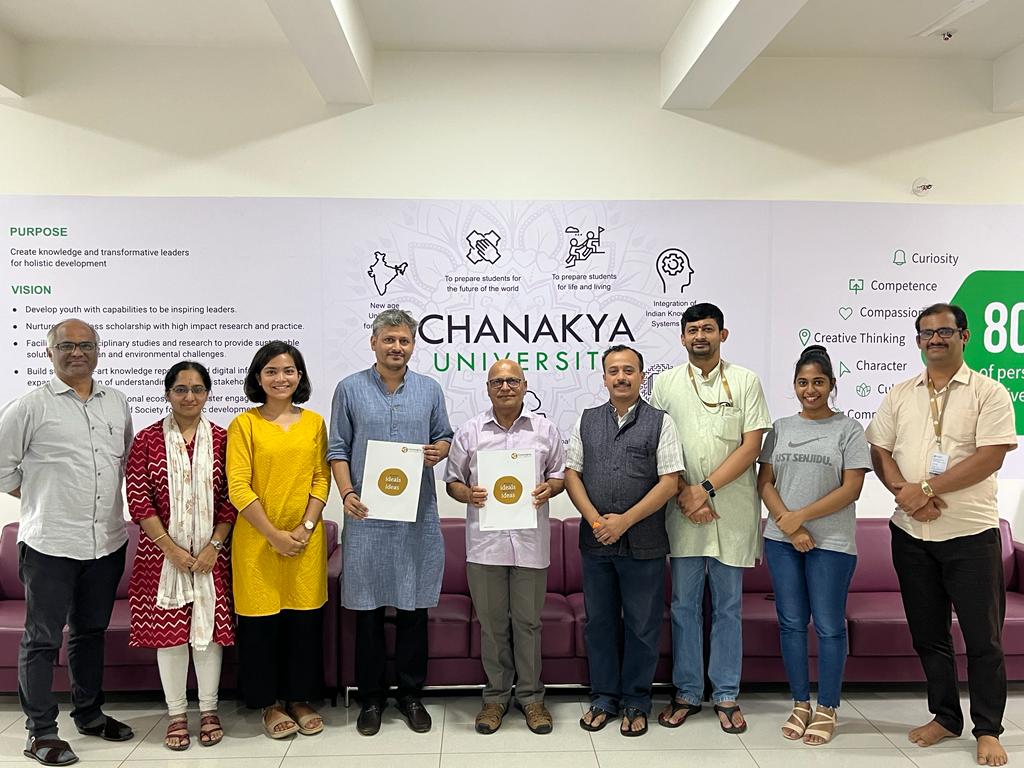
A Collaboration with Chanakya University
On June 26th, 2023 - Bṛhat Educational Trust signed an MoU with Chanakya University, Bangalore as a critical stepping stone to key initiatives in the emergent space of Indian Knowledge Systems. We look forward to the manifestation of this shared vision for the young minds of Bhārata through stimulating quality education and training in IKS that can further develop a comprehensive ecosystem for teaching and learning based on time-tested indigenous principles.
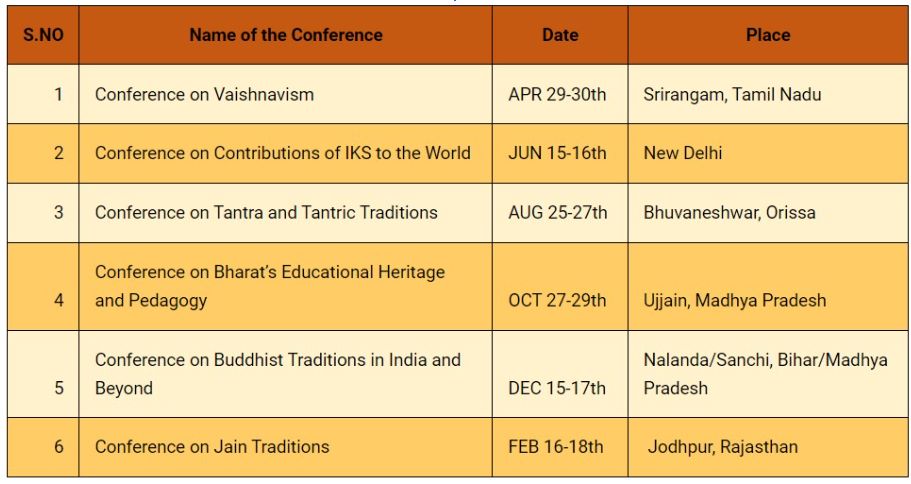
Launch of Indica's Annual Calendar
The Indic Academy has announced its conference calendar for 2023-24 on themes such as Contributions of IKS to the World, Tantra and Tantric Traditions, Bharat’s Educational Heritage and Pedagogy, Buddhist and Jaina Traditions. The institution has invited experienced scholars to apply for the position of Co-Curator for the conferences on Buddhist and Jaina traditions. Those interested in presenting papers as well as applying for the position mentioned above may visit this link -